

AP Chemistry
hình học phân tửmolecular geometry
molecular geometryVietnamese: hình học phân tử
Còn gọi:Also called: dạng hình học phân tử · cấu trúc hình học · molecular shape
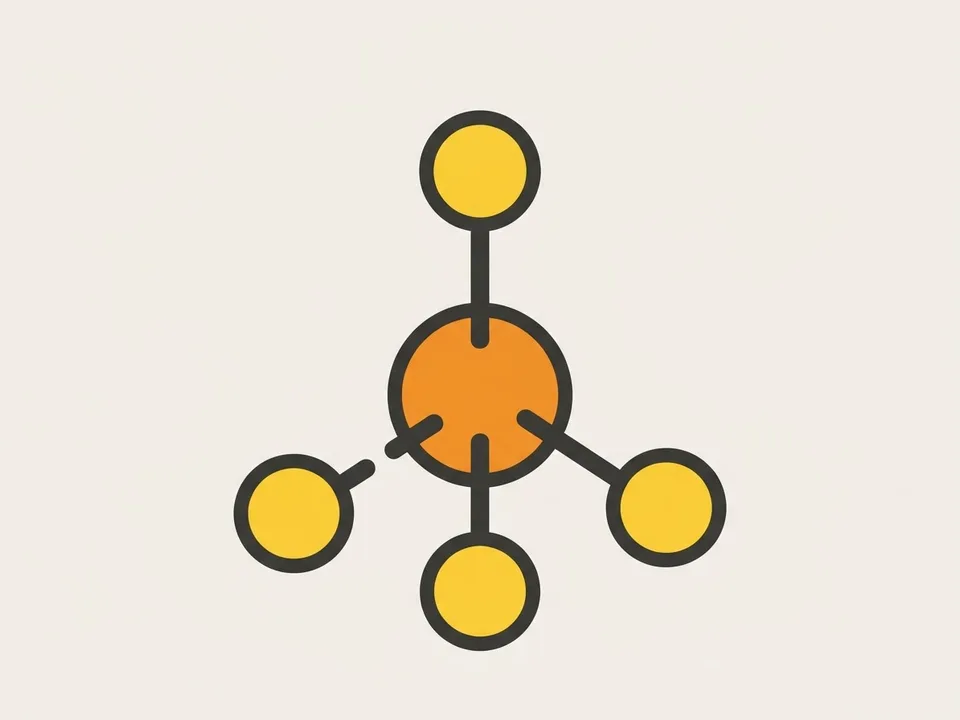
Hình học phân tử là sự sắp xếp không gian ba chiều của các nguyên tử trong phân tử, chỉ tính vị trí nguyên tử, không tính cặp electron tự do.Molecular geometry is the three-dimensional arrangement of the atoms in a molecule; it counts only atom positions, not lone pairs.
Trực giác: Hình học phân tử giống như bản đồ chỗ ngồi trong rạp chiếu phim: bạn chỉ đánh dấu chỗ có người ngồi thật sự, không đánh dấu ghế trống — dù ghế trống vẫn chiếm chỗ và ảnh hưởng đến khoảng cách giữa mọi người.Intuition: Think of molecular geometry as a seating chart in a movie theater: you mark only the seats where someone is actually sitting, not the empty ones — even though an empty seat still takes up room and changes how far apart everyone sits.
Định nghĩa đầy đủFull definition1 phút đọc1 min read
Hình học phân tử (molecular geometry) mô tả sự sắp xếp ba chiều của các nguyên tử quanh nguyên tử trung tâm. Để xác định, vẽ công thức Lewis, đếm các miền mật độ electron gồm liên kết và cặp electron tự do, rồi áp dụng mô hình đẩy cặp electron hóa trị.
Cặp tự do không thuộc hình được gọi tên nhưng ảnh hưởng góc liên kết và hình dạng. Vì vậy, cùng số miền electron có thể tạo các hình học phân tử khác nhau. Khái niệm này khác hình học electron, vốn tính cả cặp tự do.
Molecular geometry describes how the atoms around a central atom are arranged in three dimensions. To find it, draw the Lewis structure, count the regions of electron density (bonds plus lone pairs) around the central atom, and apply the valence shell electron pair repulsion model.
Lone pairs are not part of the name of the shape, but they still affect bond angles and the overall shape. As a result, the same number of electron domains can give different molecular geometries. Molecular geometry is therefore distinct from electron geometry, which does include lone pairs.
Hay hiểu saiCommon misconceptions3 ý · 1 phút đọc3 points · 1 min read
Hình học phân tử không phải hình học electron.
Nó chỉ gọi tên cách các nguyên tử sắp xếp; cặp tự do vẫn ảnh hưởng hình dạng. Vì thế, có cấu hình miền electron tứ diện nhưng hình học phân tử là chóp tam giác.
Trong mô hình VSEPR, liên kết bội chỉ tạo một miền electron.
Mỗi liên kết giữa hai nguyên tử được tính là một miền, dù là liên kết đơn, đôi hay ba. Hai liên kết đôi trong tạo hai miền, nên phân tử thẳng với góc .
Cặp electron tự do có thể thu hẹp góc liên kết.
Chúng chiếm nhiều không gian và đẩy mạnh hơn cặp liên kết; góc trong khoảng , còn khoảng , so với góc tứ diện lý tưởng .
Molecular geometry is not the same as electron geometry.
Molecular geometry names only how the atoms sit, yet lone pairs still shape the molecule. has a tetrahedral arrangement of electron domains but a trigonal pyramidal molecular geometry.
In VSEPR, a multiple bond counts as a single electron domain.
Any bond between two atoms is one domain, whether it is single, double, or triple. The two double bonds in give two domains, so the molecule is linear with a angle.
Lone pairs can squeeze bond angles below the ideal value.
They spread out more and repel more strongly than bonding pairs: the angle in is about and in about , compared with the ideal tetrahedral .
Mẹo phòng thiExam tips2 mẹo2 tips
Vẽ cấu trúc Lewis trước khi gọi tên hình.
Đếm tổng electron hóa trị, phân bố liên kết, rồi xác định số cặp liên kết và cặp tự do quanh nguyên tử trung tâm.
Câu tự luận nên trình bày đủ chuỗi lập luận.
Nêu số miền electron và cặp tự do trước, rồi kết luận hình dựa trên sự đẩy nhau tối đa.
Draw the Lewis structure before you name any shape.
Count the total valence electrons, distribute the bonds, then determine how many bonding pairs and lone pairs surround the central atom.
On free-response questions, show the full chain of reasoning.
State the number of electron domains and lone pairs first, then conclude the shape from maximum repulsion between domains.
Khái niệm này sinh ra từ đâuWhere the concept comes from1 phút đọc1 min read
1939–1957Ryutaro TsuchidaNevil SidgwickHerbert Marcus PowellRonald GillespieRonald Sydney Nyholm
Vì sao mang đúng cái tên này? Chữ "hình học" trong tên gọi không hề là ẩn dụ: khái niệm này nói đúng về cách các nguyên tử được sắp đặt trong không gian ba chiều, tức là góc liên kết và hình khối mà phân tử tạo ra. Công cụ dự đoán hình dạng ấy có tên đầy đủ là lý thuyết đẩy giữa các cặp electron lớp vỏ hóa trị (valence shell electron pair repulsion), viết tắt thành VSEPR — tên gọi chính là phát biểu rút gọn của nguyên lý: các cặp electron hóa trị quanh một nguyên tử đẩy nhau, nên chúng tự xếp sao cho xa nhau nhất, và chính cách xếp đó quyết định hình dạng. Ngoài ra lý thuyết còn được gọi bằng tên hai nhóm tác giả: Gillespie–Nyholm theo hai người phát triển chính, và Sidgwick–Powell theo công trình sớm hơn.
Thử nghiệm tương tácInteractive explorer
%22%2F%3E%3Cg%20opacity%3D%220.16%22%20stroke%3D%22%237dd3fc%22%20stroke-width%3D%220.7%22%3E%3Cline%20x1%3D%2216%22%20x2%3D%22624%22%20y1%3D%22318%22%20y2%3D%22318%22%2F%3E%3Cline%20x1%3D%2216%22%20x2%3D%22624%22%20y1%3D%22315.4%22%20y2%3D%22315.4%22%2F%3E%3Cline%20x1%3D%2216%22%20x2%3D%22624%22%20y1%3D%22307.6%22%20y2%3D%22307.6%22%2F%3E%3Cline%20x1%3D%2216%22%20x2%3D%22624%22%20y1%3D%22294.6%22%20y2%3D%22294.6%22%2F%3E%3Cline%20x1%3D%2216%22%20x2%3D%22624%22%20y1%3D%22276.4%22%20y2%3D%22276.4%22%2F%3E%3Cline%20x1%3D%2216%22%20x2%3D%22624%22%20y1%3D%22253%22%20y2%3D%22253%22%2F%3E%3Cline%20x1%3D%2216%22%20x2%3D%22624%22%20y1%3D%22224.39999999999998%22%20y2%3D%22224.39999999999998%22%2F%3E%3Cline%20x1%3D%2216%22%20x2%3D%22216.6%22%20y1%3D%22318%22%20y2%3D%22224.39999999999998%22%2F%3E%3Cline%20x1%3D%2276.8%22%20x2%3D%22237.3%22%20y1%3D%22318%22%20y2%3D%22224.39999999999998%22%2F%3E%3Cline%20x1%3D%22137.6%22%20x2%3D%22258.0%22%20y1%3D%22318%22%20y2%3D%22224.39999999999998%22%2F%3E%3Cline%20x1%3D%22198.4%22%20x2%3D%22278.7%22%20y1%3D%22318%22%20y2%3D%22224.39999999999998%22%2F%3E%3Cline%20x1%3D%22259.2%22%20x2%3D%22299.3%22%20y1%3D%22318%22%20y2%3D%22224.39999999999998%22%2F%3E%3Cline%20x1%3D%22320%22%20x2%3D%22320.0%22%20y1%3D%22318%22%20y2%3D%22224.39999999999998%22%2F%3E%3Cline%20x1%3D%22380.8%22%20x2%3D%22340.7%22%20y1%3D%22318%22%20y2%3D%22224.39999999999998%22%2F%3E%3Cline%20x1%3D%22441.6%22%20x2%3D%22361.3%22%20y1%3D%22318%22%20y2%3D%22224.39999999999998%22%2F%3E%3Cline%20x1%3D%22502.4%22%20x2%3D%22382.0%22%20y1%3D%22318%22%20y2%3D%22224.39999999999998%22%2F%3E%3Cline%20x1%3D%22563.2%22%20x2%3D%22402.7%22%20y1%3D%22318%22%20y2%3D%22224.39999999999998%22%2F%3E%3Cline%20x1%3D%22624%22%20x2%3D%22423.4%22%20y1%3D%22318%22%20y2%3D%22224.39999999999998%22%2F%3E%3C%2Fg%3E%3Ccircle%20cx%3D%22310.0%22%20cy%3D%22102.8%22%20r%3D%227.1%22%20fill%3D%22var(--info%2C%232563eb)%22%2F%3E%3Ccircle%20cx%3D%22330.1%22%20cy%3D%22102.9%22%20r%3D%227.1%22%20fill%3D%22var(--info%2C%232563eb)%22%2F%3E%3Ccircle%20cx%3D%22424.2%22%20cy%3D%22188.1%22%20r%3D%2226.9%22%20fill%3D%22%23f1f5f9%22%20stroke%3D%22rgba(255%2C255%2C255%2C0.35)%22%20stroke-width%3D%220.9%22%2F%3E%3Ccircle%20cx%3D%22207.9%22%20cy%3D%22193.5%22%20r%3D%2226.5%22%20fill%3D%22%23f1f5f9%22%20stroke%3D%22rgba(255%2C255%2C255%2C0.35)%22%20stroke-width%3D%220.9%22%2F%3E%3Cline%20x1%3D%22424.2%22%20y1%3D%22188.1%22%20x2%3D%22372.1%22%20y2%3D%22176.6%22%20stroke%3D%22%23f1f5f9%22%20stroke-width%3D%2212.3%22%20stroke-linecap%3D%22round%22%20opacity%3D%220.92%22%2F%3E%3Cline%20x1%3D%22207.9%22%20y1%3D%22193.5%22%20x2%3D%22263.9%22%20y2%3D%22179.2%22%20stroke%3D%22%23f1f5f9%22%20stroke-width%3D%2212.2%22%20stroke-linecap%3D%22round%22%20opacity%3D%220.92%22%2F%3E%3Cline%20x1%3D%22320.0%22%20y1%3D%22165.0%22%20x2%3D%22372.1%22%20y2%3D%22176.6%22%20stroke%3D%22%233b82f6%22%20stroke-width%3D%2211.4%22%20stroke-linecap%3D%22round%22%20opacity%3D%220.92%22%2F%3E%3Cline%20x1%3D%22320.0%22%20y1%3D%22165.0%22%20x2%3D%22263.9%22%20y2%3D%22179.2%22%20stroke%3D%22%233b82f6%22%20stroke-width%3D%2211.4%22%20stroke-linecap%3D%22round%22%20opacity%3D%220.92%22%2F%3E%3Ccircle%20cx%3D%22320.0%22%20cy%3D%22165.0%22%20r%3D%2237.4%22%20fill%3D%22%233b82f6%22%20stroke%3D%22rgba(255%2C255%2C255%2C0.35)%22%20stroke-width%3D%220.9%22%2F%3E%3Cline%20x1%3D%22320.0%22%20y1%3D%22165.0%22%20x2%3D%22324.0%22%20y2%3D%22203.5%22%20stroke%3D%22%233b82f6%22%20stroke-width%3D%2211.4%22%20stroke-linecap%3D%22round%22%20opacity%3D%220.92%22%2F%3E%3Cline%20x1%3D%22328.1%22%20y1%3D%22242.0%22%20x2%3D%22324.0%22%20y2%3D%22203.5%22%20stroke%3D%22%23f1f5f9%22%20stroke-width%3D%2210.5%22%20stroke-linecap%3D%22round%22%20opacity%3D%220.92%22%2F%3E%3Ccircle%20cx%3D%22328.1%22%20cy%3D%22242.0%22%20r%3D%2222.9%22%20fill%3D%22%23f1f5f9%22%20stroke%3D%22rgba(255%2C255%2C255%2C0.35)%22%20stroke-width%3D%220.9%22%2F%3E%3Ctext%20x%3D%22320.0%22%20y%3D%22169.0%22%20text-anchor%3D%22middle%22%20font-size%3D%2222.8%22%20font-weight%3D%22700%22%20fill%3D%22%23fff%22%3EN%3C%2Ftext%3E%3Ctext%20x%3D%22424.2%22%20y%3D%22192.1%22%20text-anchor%3D%22middle%22%20font-size%3D%2224.7%22%20font-weight%3D%22700%22%20fill%3D%22%230f172a%22%3EH%3C%2Ftext%3E%3Ctext%20x%3D%22328.1%22%20y%3D%22246.0%22%20text-anchor%3D%22middle%22%20font-size%3D%2221.0%22%20font-weight%3D%22700%22%20fill%3D%22%230f172a%22%3EH%3C%2Ftext%3E%3Ctext%20x%3D%22207.9%22%20y%3D%22197.5%22%20text-anchor%3D%22middle%22%20font-size%3D%2224.3%22%20font-weight%3D%22700%22%20fill%3D%22%230f172a%22%3EH%3C%2Ftext%3E%3Ctext%20x%3D%22320%22%20y%3D%22320%22%20text-anchor%3D%22middle%22%20font-size%3D%2212%22%20fill%3D%22rgba(226%2C232%2C240%2C0.85)%22%3Ech%C3%B3p%20tam%20gi%C3%A1c%20%C2%B7%20107%C2%B0%3C%2Ftext%3E%3C%2Fsvg%3E)
Xoay phân tử NH₃ — tìm chỗ cặp electron chưa liên kết ngồi mà không được gọi tên
Kéo tham số, thấy khái niệm chuyển động — đăng nhập để mở.Drag the parameters and watch the concept move — sign in to open.
Bạn nắm chắc chưa?Check your understanding
Quiz câu thật từ ngân hàng đềReal exam questions from our question bank
Vài câu thật gắn đúng khái niệm này, chấm ngay kèm giải thích từng đáp án — hệ thống ghi nhớ bạn nắm tới đâu.A few real questions on exactly this concept, graded instantly with an explanation for every choice — the system remembers how well you know it.
Học tiếp từ đâyKeep learning
Cùng chủ đềSame topic
- mô hình lực đẩy giữa các cặp electron hóa trịvalence-shell electron-pair repulsion model
- liên kết pipi bond
- liên kết sigmasigma bond
- nguyên tử trung tâmcentral atom
- trạng thái bão hòasaturated
- công thức LewisLewis diagram
- đồng phânisomers
- electron hóa trịvalence electrons
- liên kết cộng hóa trịcovalent bond
- liên kết đôidouble bond
- liên kết hydrogenhydrogen bonding
- orbitalorbital
Nguồn tham khảoReferences
- [1]Chemistry The Central Science in SI Units 15th Expanded Global Edition. tr. 11, 16, 112.
Biên soạn bởi DucklingStudy, bản quyền thuộc DucklingStudy.Written by DucklingStudy. © DucklingStudy. Xuất bảnPublished .