

AP Chemistry
dung dịch đệmbuffer
bufferVietnamese: dung dịch đệm
Còn gọi:Also called: đệm · dung dịch buffer
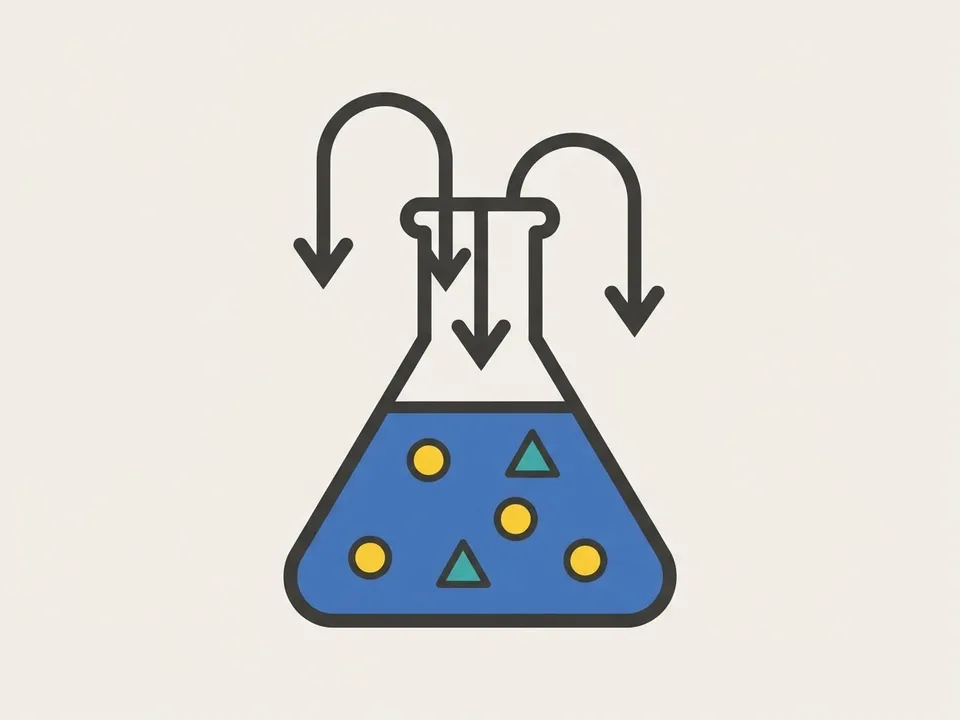
Dung dịch đệm là hỗn hợp chứa một acid yếu và base liên hợp của nó, có khả năng chống lại sự thay đổi pH khi thêm acid hoặc base mạnh.A buffer is a mixture of a weak acid and its conjugate base that resists changes in pH when small amounts of strong acid or strong base are added.
Trực giác: Dung dịch đệm giống như tấm khiên hai mặt: mặt acid yếu trung hòa đòn tấn công base, mặt base liên hợp trung hòa đòn tấn công acid, triệt tiêu cả hai chiều xung lực để giữ thành trì (pH) nguyên vẹn.Intuition: A buffer works like a two-sided shield: the weak acid side absorbs an incoming base attack, the conjugate base side absorbs an incoming acid attack, and blows from either direction are blunted so the fortress wall (the pH) stands unchanged.
Công thức chínhKey formula
Định nghĩa đầy đủFull definition1 phút đọc1 min read
Dung dịch đệm (buffer) chứa một acid yếu và base liên hợp, hoặc một base yếu và acid liên hợp, cùng ở nồng độ đáng kể. Acid của cặp trung hòa lượng nhỏ base mạnh; base của cặp trung hòa lượng nhỏ acid mạnh, nên pH biến đổi ít.
Đệm hiệu quả nhất khi pH gần và hai thành phần gần bằng nhau; vùng hữu hiệu thường cách không quá một đơn vị. Dung tích đệm tăng theo tổng nồng độ. Khi acid hoặc base thêm vào vượt khả năng trung hòa, đệm mất tác dụng.
A buffer contains a weak acid and its conjugate base, or a weak base and its conjugate acid, with both members present at appreciable concentrations. The acid member neutralizes small additions of strong base and the base member neutralizes small additions of strong acid, so the pH shifts only slightly.
Buffering is most effective when the pH is near and the two components are nearly equal in concentration; the useful range usually extends no more than one unit on either side of . Buffer capacity grows as the total concentration of the pair increases. Once the added acid or base exceeds what the pair can neutralize, the buffer fails.
Giải nghĩa công thứcFormula breakdown1 công thức1 formula
Dùng tính pH hoặc tỉ lệ của đệm acid yếu–base liên hợp khi nồng độ hai thành phần vượt nồng độ tự do.Use this to find the pH of a weak acid–conjugate base buffer, or the ratio of its components, when both concentrations are much larger than the free concentration.
Trong đóWhere
Hay hiểu saiCommon misconceptions3 ý · 1 phút đọc3 points · 1 min read
Lượng acid và base liên hợp bằng nhau không đồng nghĩa pH bằng 7.
Khi , pH bằng . Tỉ số logarithm là base liên hợp chia acid; nhiều base hơn đưa pH lên trên , nhiều acid hơn đưa pH xuống dưới.
Không thay trực tiếp vào phương trình Henderson–Hasselbalch.
Công thức này dùng của acid liên hợp; dùng sẽ cho kết quả sai.
Trong mô hình Henderson–Hasselbalch, pha loãng không kéo pH về 7.
Khi hai nồng độ cùng giảm theo một hệ số, tỉ số và pH gần như không đổi, nhưng dung tích đệm giảm.
Equal amounts of acid and conjugate base do not mean pH is 7.
When , the pH equals . The ratio inside the logarithm is conjugate base over acid, so excess base pushes the pH above and excess acid pulls it below.
Never substitute directly into the Henderson–Hasselbalch equation.
The equation is written in terms of the of the conjugate acid, so using gives a wrong answer.
Within the Henderson–Hasselbalch model, dilution does not drive the pH toward 7.
Scaling both concentrations down by the same factor leaves the ratio, and therefore the pH, essentially unchanged, although buffer capacity drops.
Mẹo phòng thiExam tips2 mẹo2 tips
Xác định acid và base liên hợp trước khi thay số.
Viết công thức rồi gắn từng lượng chất vào đúng vai trò để tránh đảo tỉ số hoặc dùng nhầm .
Ước lượng pH so với trước khi bấm máy.
Base liên hợp nhiều hơn thì pH cao hơn; acid nhiều hơn thì thấp hơn; bằng nhau thì bằng . Sau đó kiểm tra rằng bạn đã cộng logarithm của tỉ số.
Identify which species is the acid and which is the conjugate base before plugging in numbers.
Write the equation first, then assign each amount to its proper role so you do not invert the ratio or reach for .
Predict the pH relative to before you touch the calculator.
More conjugate base means a higher pH, more acid means a lower pH, and equal amounts give exactly ; then confirm that you added the logarithm of the ratio.
Bạn nắm chắc chưa?Check your understanding
Quiz câu thật từ ngân hàng đềReal exam questions from our question bank
Vài câu thật gắn đúng khái niệm này, chấm ngay kèm giải thích từng đáp án — hệ thống ghi nhớ bạn nắm tới đâu.A few real questions on exactly this concept, graded instantly with an explanation for every choice — the system remembers how well you know it.
Học tiếp từ đâyKeep learning
Cùng chủ đềSame topic
Nguồn tham khảoReferences
- [1]Chemistry The Central Science in SI Units 15th Expanded Global Edition. tr. 18–19, 24.
Biên soạn bởi DucklingStudy, bản quyền thuộc DucklingStudy.Written by DucklingStudy. © DucklingStudy. Xuất bảnPublished .