

AP Chemistry
dung dịch bão hòasaturated solution
saturated solutionVietnamese: dung dịch bão hòa
Còn gọi:Also called: saturated aqueous solution · dung dịch đã bão hòa
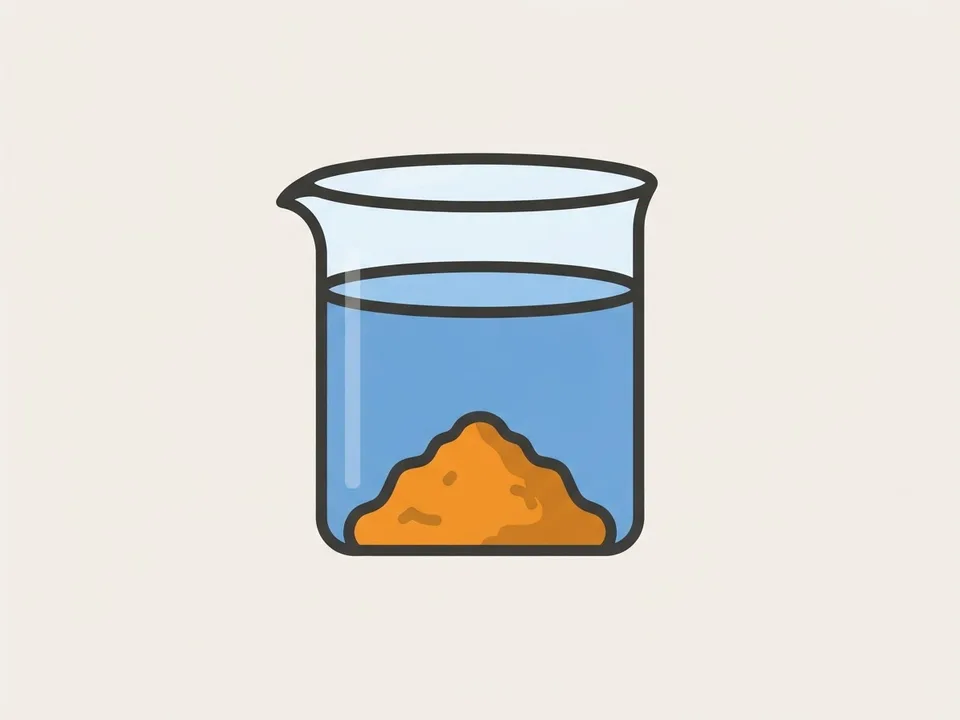
Dung dịch bão hòa là dung dịch chứa lượng chất tan tối đa có thể ở nhiệt độ xác định.A saturated solution contains the maximum amount of dissolved solute possible at a given temperature.
Trực giác: Hãy tưởng tượng bạn đang khuấy đường vào cốc nước lạnh cho đến khi đường không thể tan thêm được nữa mà cứ nằm lại dưới đáy cốc.Intuition: Picture stirring sugar into a glass of cold water until no more will dissolve and the extra sugar just settles on the bottom.
Công thức chínhKey formula
Định nghĩa đầy đủFull definition1 phút đọc1 min read
Dung dịch bão hòa (saturated solution) là dung dịch đạt nồng độ chất tan cực đại ở một nhiệt độ xác định. Khi có chất rắn chưa tan, sự hòa tan và kết tinh diễn ra với tốc độ bằng nhau, tạo cân bằng động nên nồng độ không đổi theo thời gian. Với hợp chất ion ít tan cân bằng với chất rắn, tích số nồng độ ion bằng . Bão hòa không đồng nghĩa với đậm đặc; thay đổi nhiệt độ có thể thiết lập điểm bão hòa mới.
A saturated solution holds the maximum concentration of dissolved solute at a specified temperature. When undissolved solid is present, dissolving and crystallizing occur at equal rates, so this dynamic equilibrium keeps the concentration constant over time. For a sparingly soluble ionic compound in equilibrium with its solid, the product of the ion concentrations equals . Saturated does not mean concentrated, and changing the temperature establishes a new saturation point.
Giải nghĩa công thứcFormula breakdown1 công thức1 formula
Dùng cho hợp chất ion ít tan để nhận biết dung dịch bão hòa đang cân bằng với chất rắn chưa tan.Applies to sparingly soluble ionic compounds, identifying a saturated solution in equilibrium with undissolved solid.
Trong đóWhere
Hay hiểu saiCommon misconceptions2 ý · 1 phút đọc2 points · 1 min read
Ở nhiệt độ không đổi, thêm nước không làm đổi nồng độ bão hòa nếu vẫn còn chất rắn.
Chất rắn tiếp tục tan đến khi cân bằng được lập lại. Nếu chất rắn tan hết, dung dịch bị pha loãng và không còn bão hòa.
Bão hòa không đồng nghĩa với đậm đặc.
Bão hòa chỉ cho biết lượng chất tan đã đạt giới hạn ở nhiệt độ đó. Một muối rất ít tan có thể tạo dung dịch bão hòa nhưng vẫn rất loãng.
At constant temperature, adding water does not change the saturation concentration while solid remains.
More solid simply dissolves until equilibrium is restored. Only if all the solid dissolves does the solution become diluted and no longer saturated.
Saturated is not the same as concentrated.
Saturation only tells you that the solute has reached its limit at that temperature. A very slightly soluble salt can form a saturated solution that is still extremely dilute.
Mẹo phòng thiExam tips2 mẹo2 tips
Đừng dùng thể tích nếu đề chỉ hỏi nồng độ bão hòa.
Trong bài về hợp chất ion ít tan, thể tích chỉ cần khi tính số mol hoặc khối lượng chất tan.
Muốn xét kết tủa, hãy so sánh với .
Sau khi trộn, tính lại nồng độ ion theo tổng thể tích: có kết tủa; bão hòa; chưa bão hòa.
Don't use volume when the question asks only for the saturation concentration.
In problems on sparingly soluble ionic compounds, volume matters only when you need moles or mass of dissolved solute.
To decide whether a precipitate forms, compare with .
After mixing, recalculate the ion concentrations using the total volume: means precipitation, means saturated, and means unsaturated.
Bạn nắm chắc chưa?Check your understanding
Quiz câu thật từ ngân hàng đềReal exam questions from our question bank
Vài câu thật gắn đúng khái niệm này, chấm ngay kèm giải thích từng đáp án — hệ thống ghi nhớ bạn nắm tới đâu.A few real questions on exactly this concept, graded instantly with an explanation for every choice — the system remembers how well you know it.
Học tiếp từ đâyKeep learning
Hay nhầm vớiOften confused with
Cùng chủ đềSame topic
Nguồn tham khảoReferences
- [1]Chemistry The Central Science in SI Units 15th Expanded Global Edition. tr. 17, 615, 621.
Biên soạn bởi DucklingStudy, bản quyền thuộc DucklingStudy.Written by DucklingStudy. © DucklingStudy. Xuất bảnPublished .