

AP Chemistry
trạng thái cơ bảnground state
ground stateVietnamese: trạng thái cơ bản
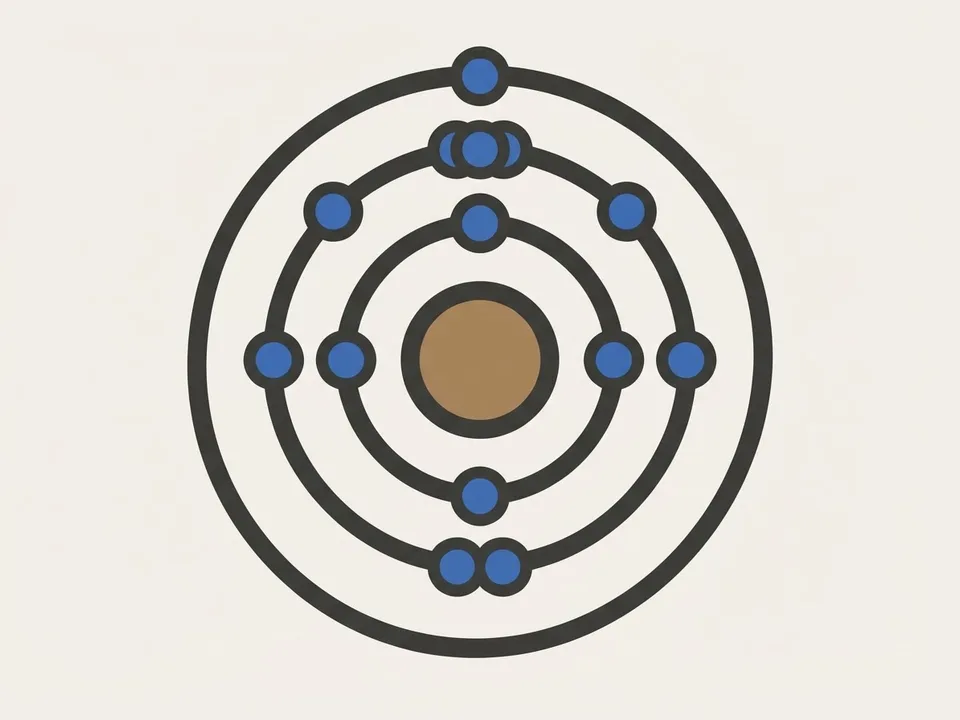
Trạng thái cơ bản là trạng thái có năng lượng thấp nhất và bền vững nhất của một nguyên tử hay phân tử.The ground state is the lowest-energy, most stable state of an atom or molecule.
Trực giác: Hãy tưởng tượng một viên bi nằm yên ở đáy bát — đó là vị trí thấp nhất và bền nhất; muốn viên bi lên thành bát, ta phải cung cấp năng lượng.Intuition: Picture a marble resting at the bottom of a bowl — the lowest and most stable spot. To move it up the side of the bowl, you have to supply energy.
Công thức chínhKey formula
Định nghĩa đầy đủFull definition1 phút đọc1 min read
Trạng thái cơ bản (ground state) là trạng thái trong đó nguyên tử hoặc phân tử có năng lượng thấp nhất được phép. Với nguyên tử, mọi electron chiếm các mức thấp nhất cho phép; vì không còn mức thấp hơn để chuyển xuống, nguyên tử không tự phát phát bức xạ điện từ.
Khi hấp thụ năng lượng đúng bằng hiệu giữa hai mức, electron có thể lên mức cao hơn, tạo trạng thái kích thích. Khi electron hạ mức, nguyên tử phát photon và tạo các vạch quang phổ đặc trưng.
The ground state is the state in which an atom or molecule has the lowest energy allowed. In an atom, every electron occupies the lowest available energy levels; because there is no lower level to drop to, the atom does not spontaneously emit electromagnetic radiation.
If the atom absorbs energy exactly equal to the difference between two levels, an electron can move to a higher level, producing an excited state. When an electron falls back down, the atom emits a photon, giving rise to its characteristic spectral lines.
Giải nghĩa công thứcFormula breakdown1 công thức1 formula
Dùng cho electron trong nguyên tử hydrogen: thay để tính năng lượng ở mức ; cho trạng thái cơ bản.This applies to the electron in a hydrogen atom: substitute to find the energy of level , with giving the ground state.
Trong đóWhere
Hay hiểu saiCommon misconceptions3 ý · 1 phút đọc3 points · 1 min read
Đủ số electron chưa chắc là trạng thái cơ bản.
Cấu hình còn phải phân bố electron ở các mức năng lượng thấp nhất cho phép; electron bị đưa lên mức cao hơn tạo trạng thái kích thích.
Số mũ phân lớp không phải số electron độc thân.
Trong trạng thái cơ bản, có hai electron độc thân theo quy tắc Hund; cần xét cách electron phân bố trong ba orbital .
Ghép đôi electron quá sớm không cho trạng thái cơ bản.
Trong các orbital cùng phân lớp, electron phân bố riêng với spin song song trước khi ghép đôi; cách xếp khác có năng lượng cao hơn.
Having the right number of electrons does not guarantee a ground-state configuration.
The electrons must also fill the lowest allowed energy levels; promoting an electron to a higher level creates an excited state.
A subshell superscript is not the number of unpaired electrons.
In the ground state, has two unpaired electrons by Hund's rule, so you must consider how the electrons spread over the three orbitals.
Pairing electrons too early does not give the ground state.
Within orbitals of the same subshell, electrons occupy separate orbitals with parallel spins before pairing; any other arrangement has higher energy.
Mẹo phòng thiExam tips2 mẹo2 tips
Yêu cầu trạng thái cơ bản buộc bạn xét thứ tự lấp đầy.
Hãy áp dụng nguyên lý vững bền và quy tắc Hund; loại cấu hình kích thích có electron lên mức cao khi mức thấp còn trống.
Hãy vẽ giản đồ ô lượng tử khi đếm electron độc thân.
Vẽ ba ô cho phân lớp , năm ô cho , điền electron theo quy tắc Hund rồi đếm các ô chỉ có một electron.
The phrase "ground state" tells you to check the filling order.
Apply the Aufbau principle and Hund's rule, and reject configurations in which an electron sits at a high level while a lower level is still empty.
Draw an orbital (box) diagram whenever you count unpaired electrons.
Sketch three boxes for a subshell and five for a subshell, fill them following Hund's rule, then count the boxes holding a single electron.
Bạn nắm chắc chưa?Check your understanding
Quiz câu thật từ ngân hàng đềReal exam questions from our question bank
Vài câu thật gắn đúng khái niệm này, chấm ngay kèm giải thích từng đáp án — hệ thống ghi nhớ bạn nắm tới đâu.A few real questions on exactly this concept, graded instantly with an explanation for every choice — the system remembers how well you know it.
Học tiếp từ đâyKeep learning
Hay nhầm vớiOften confused with
Cùng chủ đềSame topic
Nguồn tham khảoReferences
- [1]Chemistry The Central Science in SI Units 15th Expanded Global Edition. tr. 286, 294, 296.
Biên soạn bởi DucklingStudy, bản quyền thuộc DucklingStudy.Written by DucklingStudy. © DucklingStudy. Xuất bảnPublished .