

AP Chemistry
cộng hưởngresonance
resonanceVietnamese: cộng hưởng
Còn gọi:Also called: hiện tượng cộng hưởng · hiệu ứng cộng hưởng · resonance stabilization
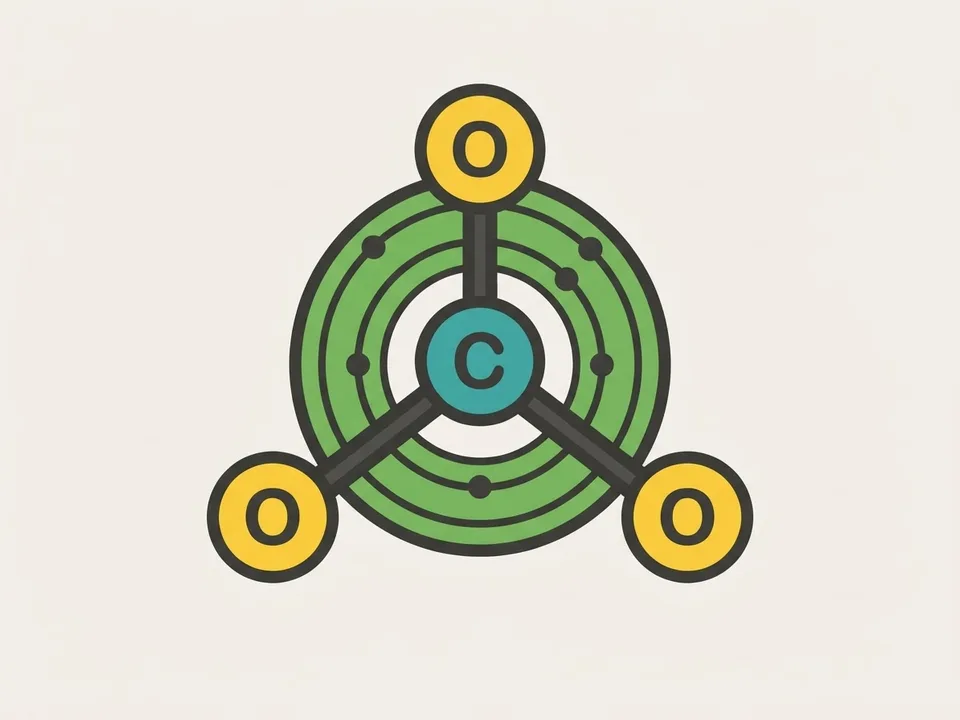
Cộng hưởng là hiện tượng electron phi định xứ trên nhiều nguyên tử, khiến cấu trúc thực là lai của nhiều công thức Lewis.Resonance is the delocalization of electrons over several atoms, so the real structure is a hybrid of two or more Lewis structures.
Trực giác: Giống như một đứa con mang nét trung bình của cả bố lẫn mẹ chứ không phải lúc giống bố lúc giống mẹ, phân tử cộng hưởng mang cấu trúc trung bình ổn định của mọi công thức đóng góp chứ không dao động giữa chúng.Intuition: A child resembles an average of both parents rather than looking like the father one moment and the mother the next. In the same way, a resonance-stabilized molecule has one steady, averaged structure instead of oscillating among its contributing forms.
Định nghĩa đầy đủFull definition1 phút đọc1 min read
Cộng hưởng (resonance) xảy ra khi một công thức Lewis không mô tả đủ sự phân bố electron của cùng một khung nguyên tử. Cấu trúc thực là lai cộng hưởng của nhiều cấu trúc đóng góp; electron phi định xứ trên nhiều nguyên tử, không chuyển qua lại giữa các công thức.
Các cấu trúc không đóng góp ngang nhau. Cấu trúc ưu thế thường có bát tử đầy đủ, điện tích hình thức nhỏ và điện tích âm trên nguyên tử có độ âm điện lớn hơn.
Resonance occurs when a single Lewis structure cannot adequately describe the electron distribution for one fixed arrangement of atoms. The real species is a resonance hybrid of several contributing structures: the electrons are delocalized over several atoms rather than flipping back and forth between the drawings.
Contributing structures do not count equally. The dominant structure usually has complete octets, small formal charges, and any negative charge placed on the more electronegative atom.
Hay hiểu saiCommon misconceptions3 ý · 1 phút đọc3 points · 1 min read
Phân tử không nhảy qua lại giữa các cấu trúc cộng hưởng.
Mũi tên hai đầu nối các cấu trúc đóng góp của một lai cộng hưởng; nó không biểu thị cân bằng.
Cộng hưởng chỉ đổi cách đặt electron, không đổi khung nguyên tử.
Các hình khác cách nối nguyên tử là đồng phân, không phải cấu trúc cộng hưởng.
Nhiều cấu trúc cộng hưởng không đồng nghĩa với nhiều liên kết đôi.
Với các cấu trúc tương đương, bậc và độ dài liên kết phản ánh giá trị trung bình, không một hình riêng lẻ.
A molecule does not jump back and forth between resonance structures.
The double-headed arrow links contributing structures of a single hybrid; it does not represent an equilibrium.
Resonance moves only electrons, never the atomic framework.
Drawings in which atoms are connected differently are isomers, not resonance structures.
More resonance structures does not mean more double bonds.
For equivalent structures, bond order and bond length reflect the average, not any single drawing.
Mẹo phòng thiExam tips2 mẹo2 tips
Dùng , không dùng mũi tên cân bằng.
Với ion, đặt cụm cấu trúc trong ngoặc vuông, ghi điện tích tổng và kiểm tra điện tích hình thức.
Chỉ lấy trung bình khi các cấu trúc cộng hưởng tương đương.
Cộng bậc của liên kết ở từng cấu trúc rồi chia cho số cấu trúc.
Use between structures, never an equilibrium arrow.
For an ion, enclose the set of structures in square brackets, show the overall charge, and check the formal charges.
Average bond properties only when the resonance structures are equivalent.
Add the bond order of that bond in each structure and divide by the number of structures.
Khái niệm này sinh ra từ đâuWhere the concept comes from1 phút đọc1 min read
Galileo GalileiHermann HelmholtzPaulingWheland
Vì sao mang đúng cái tên này? Tên gọi bắt nguồn từ tiếng Latin resonantia, nghĩa là "tiếng vọng", vốn đi ra từ động từ resonare — "vang lại", "dội tiếng". Do đó nghĩa đen của nó không dính gì đến electron: nó mô tả cảnh một vật phát ra âm thanh chỉ vì hưởng ứng theo rung động của vật khác. Chính vì gốc âm học ấy mà cái tên nghe có vẻ vô lý khi đặt vào hóa học, nơi phân tử chẳng "ngân" theo nghĩa nào cả. Người học nên nhớ rằng chữ này được mượn từ vật lý sang, và trong đề thi nó xuất hiện dưới dạng các cấu trúc cộng hưởng (resonance structures).
Bạn nắm chắc chưa?Check your understanding
Quiz câu thật từ ngân hàng đềReal exam questions from our question bank
Vài câu thật gắn đúng khái niệm này, chấm ngay kèm giải thích từng đáp án — hệ thống ghi nhớ bạn nắm tới đâu.A few real questions on exactly this concept, graded instantly with an explanation for every choice — the system remembers how well you know it.
Học tiếp từ đâyKeep learning
Hay nhầm vớiOften confused with
Cùng chủ đềSame topic
Nguồn tham khảoReferences
- [1]Chemistry The Central Science in SI Units 15th Expanded Global Edition. tr. 15–16, 22.
Biên soạn bởi DucklingStudy, bản quyền thuộc DucklingStudy.Written by DucklingStudy. © DucklingStudy. Xuất bảnPublished .