

AP Chemistry
entropyentropy
entropyVietnamese: entropy
Còn gọi:Also called: S · độ hỗn loạn · độ mất trật tự
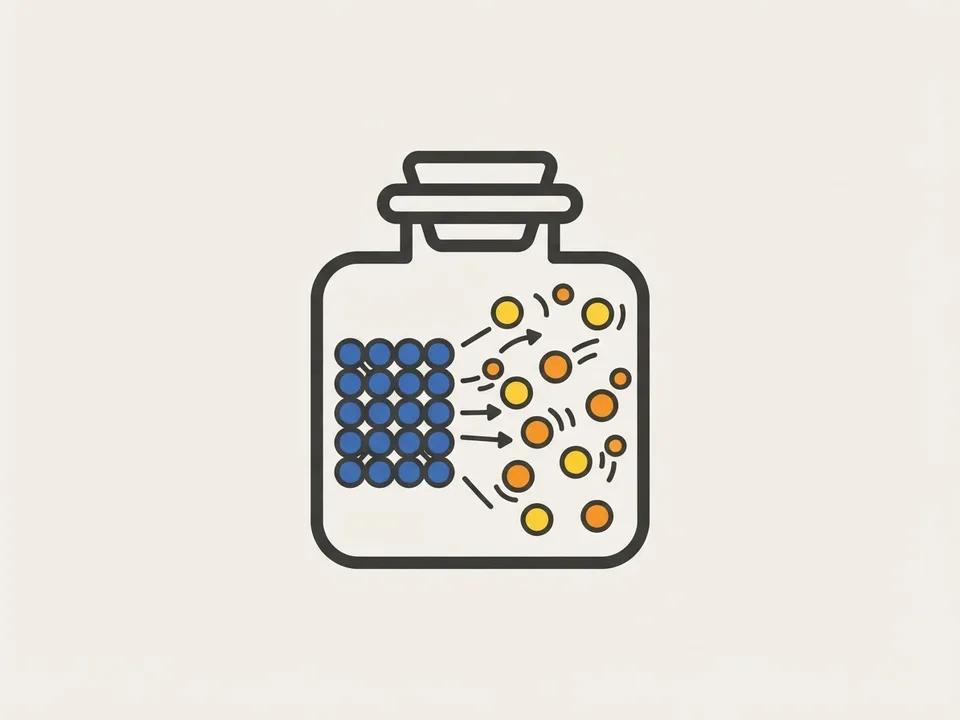
Entropy là đại lượng nhiệt động đo mức độ phân tán năng lượng của hệ, tăng theo số cách sắp xếp vi mô ứng với cùng một trạng thái vĩ mô.Entropy is a thermodynamic quantity that measures how dispersed a system's energy is; it increases with the number of microscopic arrangements that correspond to the same macroscopic state.
Trực giác: Nhỏ một giọt mực vào cốc nước: mực tự tản ra khắp cốc vì có vô số cách để nó tản, nhưng gần như không có cách nào để nó tự gom lại thành giọt cũ.Intuition: Drop a bead of ink into a glass of water and it spreads throughout on its own, because there are countless ways for the ink to be spread out but essentially no way for it to gather back into the original drop.
Công thức chínhKey formula
Định nghĩa đầy đủFull definition1 phút đọc1 min read
Entropy là đại lượng nhiệt động biểu thị mức phân tán năng lượng qua số vi trạng thái tương ứng với một trạng thái vĩ mô; số vi trạng thái càng lớn, entropy càng lớn. “Độ hỗn loạn” chỉ là hình ảnh gợi ý, không phải định nghĩa chính xác.
Với phản ứng, biến thiên entropy chuẩn là tổng entropy mol chuẩn của sản phẩm trừ của chất phản ứng, có nhân hệ số. của hệ không tự quyết định chiều tự diễn biến; phải xét cả môi trường.
Entropy is a thermodynamic quantity that describes the dispersal of energy in terms of the number of microstates available to a single macroscopic state: the more microstates, the greater the entropy. Calling entropy "disorder" is only a loose picture, not a precise definition.
For a reaction, the standard entropy change equals the sum of the standard molar entropies of the products minus those of the reactants, each weighted by its coefficient. The of the system alone does not determine whether a process is spontaneous; the surroundings must also be considered.
Giải nghĩa công thứcFormula breakdown1 công thức1 formula
Dùng cho hệ ở cân bằng nhiệt động khi biết số vi trạng thái, để liên hệ cấu hình vi mô với entropy vĩ mô.Use this for a system at thermodynamic equilibrium when the number of microstates is known, to link the microscopic configurations to the macroscopic entropy.
Trong đóWhere
Hay hiểu saiCommon misconceptions3 ý · 1 phút đọc3 points · 1 min read
Phản ứng tách thành nhiều chất không nhất thiết làm entropy tăng.
Khi số mol khí thay đổi, phần khí là dấu hiệu cần xét, không phải số công thức hay loại phản ứng.
Entropy không đồng nghĩa với mức độ hỗn loạn.
Nó dựa trên số vi trạng thái, gồm cách phân bố vật chất và năng lượng; tăng nhiệt độ có thể tăng entropy dù thể tích không đổi.
Chuyển sang pha đặc hơn không giữ nguyên entropy.
Khi khí hóa lỏng hoặc lỏng hóa rắn, hạt bị bó hẹp, làm số vi trạng thái và entropy giảm.
A reaction that breaks one substance into several does not have to increase entropy.
What matters is the change in moles of gas, not the number of formulas or the type of reaction.
Entropy is not the same thing as messiness.
It depends on the number of microstates, which covers how both matter and energy are distributed, so raising the temperature can raise entropy even at constant volume.
Moving to a denser phase does not leave entropy unchanged.
When a gas condenses or a liquid freezes, the particles become confined, so the number of microstates and the entropy both decrease.
Mẹo phòng thiExam tips2 mẹo2 tips
So sánh số mol khí trước khi dự đoán dấu .
Bỏ pha rắn và lỏng khỏi phép so sánh này; nếu số mol khí bằng nhau, xét độ phức tạp phân tử và tổng số hạt.
Giải thích dấu bằng đúng thay đổi trong đề.
Nêu rõ số mol khí tăng làm vật chất phân tán hơn, hoặc nhiệt độ tăng tạo thêm vi trạng thái; không trộn nguyên nhân không xảy ra.
Compare moles of gas before predicting the sign of .
Leave solids and liquids out of this comparison; if the moles of gas are equal, look at molecular complexity and the total number of particles.
Justify the sign of using the change actually described in the problem.
Say specifically that more moles of gas disperse the matter further, or that a higher temperature opens up more microstates, and do not invoke a cause that is not happening.
Khái niệm này sinh ra từ đâuWhere the concept comes from1 phút đọc1 min read
1865Rudolf ClausiusLudwig BoltzmannWillard GibbsSadi CarnotClaude Shannon
Vì sao mang đúng cái tên này? Clausius ghép từ này từ tiếng Hy Lạp: ông giữ tiền tố của chữ "energy" nhưng thay gốc ἔργον (ergon, nghĩa là "công") bằng gốc τροπή (tropē, nghĩa là "sự biến đổi, sự xoay chiều"). Chủ ý rất rõ ràng — ông muốn cái tên mới nghe song song với "năng lượng", vì ông thấy hai khái niệm gần như tương đồng về ý nghĩa vật lý; ban đầu ông còn gọi nó là "nội dung biến đổi" (Verwandlungsinhalt). Vì vậy, cái tên nghe khó hiểu này thật ra tự nó đã nói lên định nghĩa: đại lượng đo mức độ biến đổi mà một hệ đã trải qua. Trước đó William Rankine từng gọi cùng ý tưởng bằng những tên khác như "hàm nhiệt động" và "thế nhiệt", nhưng chính cái tên của Clausius trụ lại. Năm 1948, Claude Shannon mượn lại đúng chữ này cho lý thuyết thông tin, khiến một từ sinh ra từ máy hơi nước ngày nay còn xuất hiện trong khoa học máy tính.
Bạn nắm chắc chưa?Check your understanding
Quiz câu thật từ ngân hàng đềReal exam questions from our question bank
Vài câu thật gắn đúng khái niệm này, chấm ngay kèm giải thích từng đáp án — hệ thống ghi nhớ bạn nắm tới đâu.A few real questions on exactly this concept, graded instantly with an explanation for every choice — the system remembers how well you know it.
Học tiếp từ đâyKeep learning
Hay nhầm vớiOften confused with
Cùng chủ đềSame topic
Nguồn tham khảoReferences
- [1]Chemistry The Central Science in SI Units 15th Expanded Global Edition. tr. 19, 21, 24.
Biên soạn bởi DucklingStudy, bản quyền thuộc DucklingStudy.Written by DucklingStudy. © DucklingStudy. Xuất bảnPublished .