

AP Chemistry
anionanion
anionVietnamese: anion
Còn gọi:Also called: ion âm
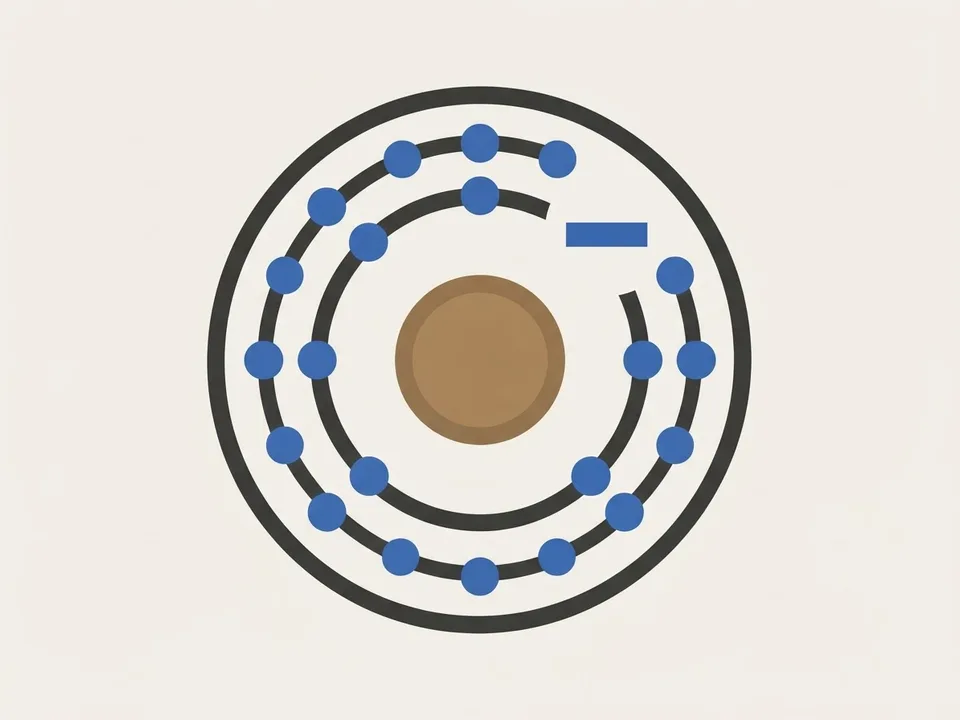
Anion là ion mang điện tích âm, được hình thành khi một nguyên tử hoặc nhóm nguyên tử nhận thêm electron.An anion is a negatively charged ion, formed when an atom or group of atoms gains electrons.
Trực giác: Hãy tưởng tượng một quả bóng trung hòa bỗng dính thêm vài viên nam châm nhỏ — nó trở nên nặng hơn và mang 'tích âm', giống như nguyên tử nhận thêm electron để thành anion.Intuition: Picture a neutral ball that suddenly picks up a few tiny magnets — it gets heavier and carries a "negative" charge, just as an atom gains electrons to become an anion.
Định nghĩa đầy đủFull definition1 phút đọc1 min read
Anion là ion có điện tích tổng cộng âm, gồm một nguyên tử đã nhận electron hoặc một nhóm nguyên tử liên kết cộng hóa trị mang điện âm. Việc nguyên tử nhận electron là sự khử.
Trong hợp chất ion, anion hút cation bằng lực tĩnh điện. Trong dung dịch điện phân, anion chuyển về cực dương. Anion có thể là ion đơn nguyên tử hoặc đa nguyên tử.
An anion is an ion with a net negative charge — either a single atom that has gained electrons or a covalently bonded group of atoms carrying negative charge. Gaining electrons is reduction.
In an ionic compound, anions attract cations through electrostatic forces. In an electrolytic solution, anions migrate toward the positive electrode. Anions may be monatomic or polyatomic.
Hay hiểu saiCommon misconceptions3 ý · 1 phút đọc3 points · 1 min read
Trong pin Daniell, anion cầu muối đi về nửa pin xảy ra oxi hoá.
Ở nửa pin kẽm, tạo ra làm dung dịch dư điện tích dương; anion di chuyển tới để trung hòa.
Electron trong dây dẫn không kéo anion qua dung dịch.
Trong pin có cầu muối, electron đi qua mạch ngoài; các ion chuyển động trong dung dịch để duy trì trung hòa điện tích.
Anion đơn nguyên tử lớn hơn nguyên tử trung hòa tương ứng.
Khi nhận electron mà số proton không đổi, lực đẩy electron tăng và đám mây electron giãn ra.
In a Daniell cell, salt-bridge anions move toward the half-cell where oxidation occurs.
At the zinc electrode, the produced leaves the solution with excess positive charge, so anions flow in to neutralize it.
Electrons in the wire do not drag anions through the solution.
In a cell with a salt bridge, electrons travel through the external circuit while ions move within the solution to maintain charge neutrality.
A monatomic anion is larger than the neutral atom it comes from.
The proton count stays the same while electrons are added, so electron–electron repulsion grows and the electron cloud expands.
Mẹo phòng thiExam tips2 mẹo2 tips
Với bài cầu muối, xác định điện tích từng nửa pin trước khi chọn hướng anion.
Hãy chỉ ra phản ứng oxi hoá hoặc khử, suy ra nơi dư điện tích, rồi dùng yêu cầu trung hòa điện tích để kết luận.
Viết số trước dấu khi ký hiệu điện tích anion.
Viết , không viết ; anion đơn nguyên tử có tên tiếng Anh tận cùng “-ide”, còn anion chứa oxygen thường tận cùng “-ate” hoặc “-ite”.
On salt-bridge questions, find the charge imbalance in each half-cell before choosing the direction of anion flow.
Identify whether oxidation or reduction occurs, deduce which side builds up excess charge, then apply charge neutrality.
Write the number before the sign in an anion's charge.
Use , not ; monatomic anion names end in "-ide," while oxygen-containing anions usually end in "-ate" or "-ite."
Khái niệm này sinh ra từ đâuWhere the concept comes from1 phút đọc1 min read
1834William WhewellMichael Faraday
Vì sao mang đúng cái tên này? Cái tên nghe lạ này thực ra là một chỉ dẫn về hướng đi. Gốc chung "ion" lấy từ động từ Hy Lạp iénai nghĩa là "đi", còn tiền tố ana- nghĩa là "lên"; ghép lại, anión có nghĩa "cái đi lên". Trong bộ thuật ngữ của Faraday, phần tử mang điện âm bị hút về cực dương (anode) nên được gọi là anion, còn phần tử đi theo chiều ngược lại — từ káto, "xuống" — thành cation. Do đó tên gọi không hề mô tả điện tích một cách trực tiếp, mà mô tả đường đi của hạt trong bình điện phân: ion luôn chạy về phía điện cực trái dấu với nó. Hiểu được điều này, bạn sẽ không còn nhầm anion với cation, vì chỉ cần nhớ anion và anode đi cùng một cặp.
Thử nghiệm tương tácInteractive explorer
%22%20stroke-width%3D%221%22%2F%3E%3Ccircle%20cx%3D%22376.0%22%20cy%3D%22154.0%22%20r%3D%224.5%22%20fill%3D%22%2393c5fd%22%2F%3E%3Ccircle%20cx%3D%22264.0%22%20cy%3D%22154.0%22%20r%3D%224.5%22%20fill%3D%22%2393c5fd%22%2F%3E%3Ccircle%20cx%3D%22320%22%20cy%3D%22154%22%20r%3D%2286%22%20fill%3D%22none%22%20stroke%3D%22var(--border%2C%23e2e8f0)%22%20stroke-width%3D%221%22%2F%3E%3Ccircle%20cx%3D%22406.0%22%20cy%3D%22154.0%22%20r%3D%224.5%22%20fill%3D%22%2393c5fd%22%2F%3E%3Ccircle%20cx%3D%22380.8%22%20cy%3D%22214.8%22%20r%3D%224.5%22%20fill%3D%22%2393c5fd%22%2F%3E%3Ccircle%20cx%3D%22320.0%22%20cy%3D%22240.0%22%20r%3D%224.5%22%20fill%3D%22%2393c5fd%22%2F%3E%3Ccircle%20cx%3D%22259.2%22%20cy%3D%22214.8%22%20r%3D%224.5%22%20fill%3D%22%2393c5fd%22%2F%3E%3Ccircle%20cx%3D%22234.0%22%20cy%3D%22154.0%22%20r%3D%224.5%22%20fill%3D%22%2393c5fd%22%2F%3E%3Ccircle%20cx%3D%22259.2%22%20cy%3D%2293.2%22%20r%3D%224.5%22%20fill%3D%22%2393c5fd%22%2F%3E%3Ccircle%20cx%3D%22320.0%22%20cy%3D%2268.0%22%20r%3D%224.5%22%20fill%3D%22%2393c5fd%22%2F%3E%3Ccircle%20cx%3D%22380.8%22%20cy%3D%2293.2%22%20r%3D%224.5%22%20fill%3D%22%2393c5fd%22%2F%3E%3Ccircle%20cx%3D%22320%22%20cy%3D%22154%22%20r%3D%22116%22%20fill%3D%22none%22%20stroke%3D%22var(--border%2C%23e2e8f0)%22%20stroke-width%3D%221%22%2F%3E%3Ccircle%20cx%3D%22436.0%22%20cy%3D%22154.0%22%20r%3D%224.5%22%20fill%3D%22%2393c5fd%22%2F%3E%3Ccircle%20cx%3D%22392.3%22%20cy%3D%22244.7%22%20r%3D%224.5%22%20fill%3D%22%2393c5fd%22%2F%3E%3Ccircle%20cx%3D%22294.2%22%20cy%3D%22267.1%22%20r%3D%224.5%22%20fill%3D%22%2393c5fd%22%2F%3E%3Ccircle%20cx%3D%22215.5%22%20cy%3D%22204.3%22%20r%3D%224.5%22%20fill%3D%22%2393c5fd%22%2F%3E%3Ccircle%20cx%3D%22215.5%22%20cy%3D%22103.7%22%20r%3D%224.5%22%20fill%3D%22%2393c5fd%22%2F%3E%3Ccircle%20cx%3D%22294.2%22%20cy%3D%2240.9%22%20r%3D%224.5%22%20fill%3D%22%2393c5fd%22%2F%3E%3Ccircle%20cx%3D%22392.3%22%20cy%3D%2263.3%22%20r%3D%224.5%22%20fill%3D%22%2393c5fd%22%2F%3E%3Ccircle%20cx%3D%22320%22%20cy%3D%22154%22%20r%3D%2226%22%20fill%3D%22var(--accent-soft%2C%23ede9fe)%22%20stroke%3D%22var(--accent-strong%2C%237c3aed)%22%20stroke-width%3D%221.6%22%2F%3E%3Ctext%20x%3D%22320%22%20y%3D%2224%22%20text-anchor%3D%22middle%22%20font-size%3D%2217%22%20font-weight%3D%22700%22%20fill%3D%22var(--text%2C%230f172a)%22%3E%3Ctspan%20font-size%3D%2212%22%20fill%3D%22var(--text-muted%2C%2364748b)%22%3E35%3C%2Ftspan%3E%3Ctspan%3ECl%3C%2Ftspan%3E%3C%2Ftext%3E%3Ctext%20x%3D%22320%22%20y%3D%22310%22%20text-anchor%3D%22middle%22%20font-size%3D%2212%22%20fill%3D%22var(--text-muted%2C%2364748b)%22%3E17%20proton%20%C2%B7%2018%20neutron%20%C2%B7%2017%20electron%3C%2Ftext%3E%3C%2Fsvg%3E)
Bấm thêm một electron vào chlorine — nhãn đổi thành Cl⁻, proton đứng yên
Kéo tham số, thấy khái niệm chuyển động — đăng nhập để mở.Drag the parameters and watch the concept move — sign in to open.
Bạn nắm chắc chưa?Check your understanding
Quiz câu thật từ ngân hàng đềReal exam questions from our question bank
Vài câu thật gắn đúng khái niệm này, chấm ngay kèm giải thích từng đáp án — hệ thống ghi nhớ bạn nắm tới đâu.A few real questions on exactly this concept, graded instantly with an explanation for every choice — the system remembers how well you know it.
Học tiếp từ đâyKeep learning
Hay nhầm vớiOften confused with
Cùng chủ đềSame topic
Nguồn tham khảoReferences
- [1]Chemistry The Central Science in SI Units 15th Expanded Global Edition. tr. 18, 20, 25.
Biên soạn bởi DucklingStudy, bản quyền thuộc DucklingStudy.Written by DucklingStudy. © DucklingStudy. Xuất bảnPublished .