

AP Chemistry
chất tansolute
soluteVietnamese: chất tan
Còn gọi:Also called: chất bị hòa tan · dissolved species
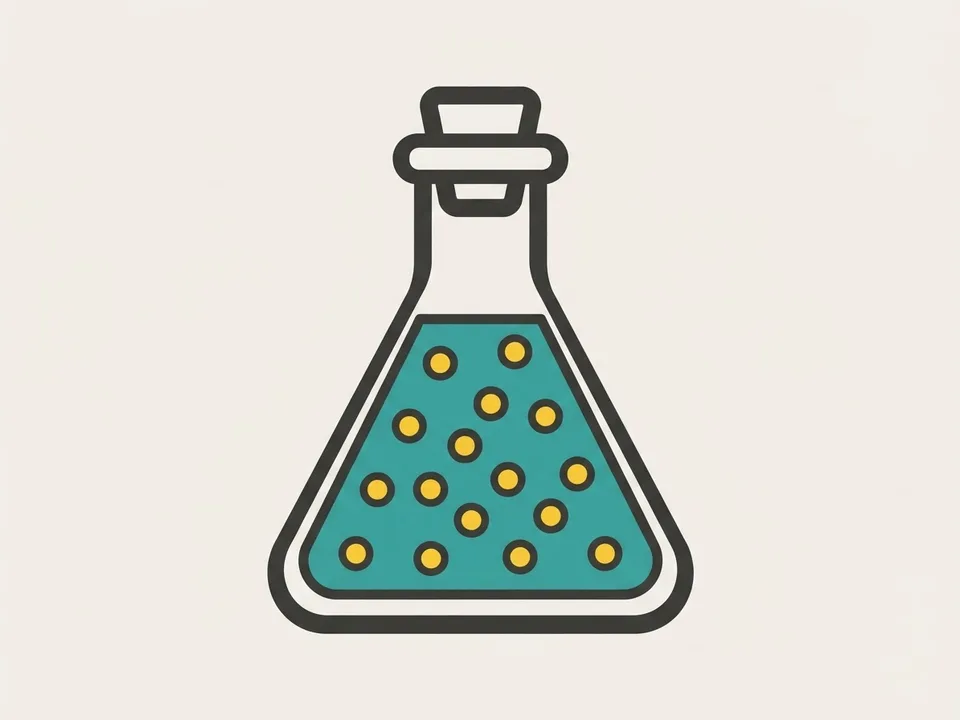
Chất tan là chất bị hòa tan trong dung môi để tạo thành dung dịch, thường có lượng nhỏ hơn dung môi.A solute is the substance that gets dissolved in a solvent to form a solution, and it is usually present in the smaller amount.
Trực giác: Như đường tan trong cốc nước — hạt đường biến mất khỏi mắt nhưng vị ngọt vẫn còn, đó là chất tan đã phân tán đều trong dung môi.Intuition: Think of sugar stirred into a glass of water: the grains disappear from sight but the sweetness remains, because the solute has spread evenly through the solvent.
Công thức chínhKey formula
Định nghĩa đầy đủFull definition1 phút đọc1 min read
Chất tan (solute) là thành phần hòa tan và phân tán đều trong dung môi để tạo dung dịch; một dung dịch có thể chứa nhiều chất tan. Chất tan thường ít hơn dung môi về số mol hoặc khối lượng, nhưng đây không phải tiêu chuẩn tuyệt đối.
Khả năng hòa tan phụ thuộc vào tương tác giữa chất tan và dung môi. Chất phân cực thường tan tốt trong dung môi phân cực; chất không phân cực thường tan tốt trong dung môi không phân cực.
A solute is the component that dissolves and spreads evenly throughout a solvent to form a solution, and a single solution can contain several solutes. The solute is usually present in a smaller amount than the solvent by mass or moles, but this is not a strict rule.
How well something dissolves depends on the interactions between solute and solvent. Polar substances generally dissolve well in polar solvents, and nonpolar substances dissolve well in nonpolar solvents.
Công thức chi tiếtFormula details2 công thức2 formulas
Dùng để tính nồng độ mol từ số mol chất tan và thể tích dung dịch tính bằng lít.Gives the molar concentration from the moles of solute and the volume of solution in liters.
Trong đóWhere
Dùng khi pha loãng, liên hệ nồng độ và thể tích dung dịch trước và sau pha loãng.Used for dilutions, relating the concentration and volume of the solution before and after dilution.
Trong đóWhere
Hay hiểu saiCommon misconceptions2 ý · 1 phút đọc2 points · 1 min read
Chất tan không nhất thiết là thành phần có lượng nhỏ hơn.
Khái niệm này dựa vào vai trò bị hòa tan trong dung môi, không phải so sánh khối lượng hay số mol. Một dung dịch cũng có thể chứa nhiều chất tan.
Trong sơ đồ hạt AP, muối tan được vẽ thành các ion tách rời.
Không vẽ cặp ion Na⁺–Cl⁻ như một phân tử. Chất kết tủa tụ thành khối rắn, còn ion khán giả vẫn phân tán trong dung dịch.
The solute is not necessarily the component present in the smaller amount.
The label depends on which substance is dissolved by the solvent, not on a comparison of masses or moles, and one solution may hold several solutes.
In AP particulate diagrams, a dissolved salt must be drawn as separated ions.
Never draw an Na⁺–Cl⁻ pair as a single molecule; a precipitate clusters into a solid, while spectator ions stay dispersed throughout the solution.
Mẹo phòng thiExam tips2 mẹo2 tips
Trong sơ đồ hạt của phản ứng kết tủa, hãy đếm ion trước.
Xác định ion tạo kết tủa, ion dư và ion khán giả. Hình đúng phải có chất rắn tụ lại, ion còn lại phân tán và tổng điện tích trung hòa.
Câu đo quang phải nêu chiều sai lệch và biện pháp khắc phục.
Nếu chưa trừ hấp thụ của dung môi, độ hấp thụ và nồng độ tính được cao hơn thực tế; cần chỉnh máy bằng mẫu trắng.
Count ions first when you analyze a particulate diagram of a precipitation reaction.
Identify which ions form the precipitate, which are in excess, and which are spectators; a correct drawing shows the solid clustered together, the remaining ions dispersed, and zero overall charge.
A spectrophotometry question must state the direction of the error and how to fix it.
If the solvent's absorbance is not subtracted, both the measured absorbance and the calculated concentration come out too high, so the instrument must be zeroed with a blank.
Khái niệm này sinh ra từ đâuWhere the concept comes from1 phút đọc1 min read
1894W. D. BancroftF. G. DonnanN. Story-Maskelyne
Vì sao mang đúng cái tên này? Gốc của tên gọi nằm ở động từ Latin solvere, nghĩa là "nới lỏng, làm tan ra"; dạng quá khứ phân từ của nó là solutus, tức "đã được làm tan". Trước khi thành danh từ hóa học, "solute" xuất hiện trong tiếng Anh khoảng năm 1890 như một tính từ mang nghĩa "đã hòa tan". Vì vậy cái tên không hề tùy tiện: nó mô tả đúng thân phận của chất ấy trong dung dịch (solution) — thứ bị dung môi (solvent) tháo rời ra chứ không phải thứ đi tháo rời. Nhờ chung một gốc Latin, ba từ solvent, solution và solute tạo thành một bộ ba khớp nhau về mặt ngôn ngữ, và chính sự khớp ấy là lý do các nhà hóa học năm 1894 chọn nó thay vì đặt một từ hoàn toàn mới.
Bạn nắm chắc chưa?Check your understanding
Quiz câu thật từ ngân hàng đềReal exam questions from our question bank
Vài câu thật gắn đúng khái niệm này, chấm ngay kèm giải thích từng đáp án — hệ thống ghi nhớ bạn nắm tới đâu.A few real questions on exactly this concept, graded instantly with an explanation for every choice — the system remembers how well you know it.
Học tiếp từ đâyKeep learning
Hay nhầm vớiOften confused with
Cùng chủ đềSame topic
Nguồn tham khảoReferences
- [1]Chemistry The Central Science in SI Units 15th Expanded Global Edition. tr. 17, 21, 25.
Biên soạn bởi DucklingStudy, bản quyền thuộc DucklingStudy.Written by DucklingStudy. © DucklingStudy. Xuất bảnPublished .