

AP Statistics
sai số chuẩnstandard error
standard errorVietnamese: sai số chuẩn
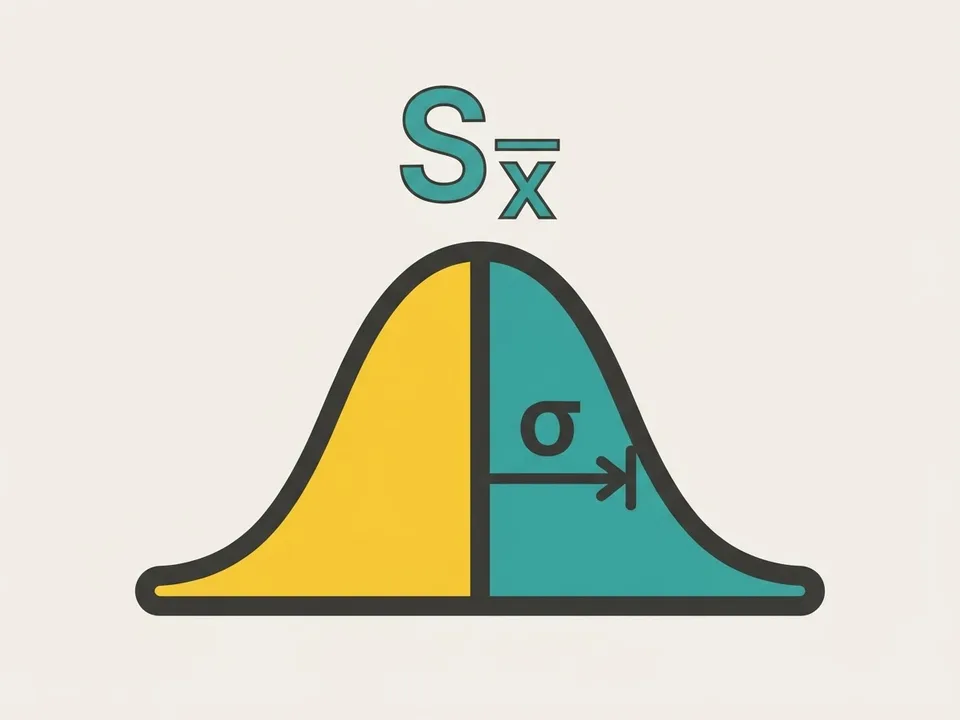
Sai số chuẩn là ước lượng độ lệch chuẩn của một đại lượng thống kê mẫu, đo mức dao động của nó khi lặp lại việc lấy mẫu nhiều lần.The standard error estimates the standard deviation of a sample statistic, measuring how much it varies from sample to sample.
Trực giác: Mỗi lần bốc một vốc gạo khác nhau từ bao lớn rồi tính trọng lượng hạt trung bình của vốc đó, các trung bình sẽ hơi khác nhau giữa các vốc; sai số chuẩn cho biết các trung bình ấy thường lệch nhau cỡ bao nhiêu.Intuition: Scoop handful after handful of rice from a big sack and find the average grain weight of each scoop: the averages come out slightly different from scoop to scoop. The standard error says how far apart those averages typically fall.
Công thức chínhKey formula
Định nghĩa đầy đủFull definition1 phút đọc1 min read
Sai số chuẩn là ước lượng độ lệch chuẩn của phân phối mẫu của một thống kê, cho biết mức dao động của thống kê ấy qua các mẫu lặp lại. Khi tham số tổng thể chưa biết, đại lượng tương ứng từ mẫu được dùng thay thế.
Với trung bình mẫu, lấy độ lệch chuẩn mẫu chia căn bậc hai cỡ mẫu; với tỉ lệ mẫu, dùng tỉ lệ quan sát được. Sai số chuẩn giảm khi cỡ mẫu tăng. Độ lệch chuẩn lại mô tả độ phân tán của dữ liệu trong mẫu.
The standard error is an estimate of the standard deviation of a statistic's sampling distribution, so it tells you how much that statistic bounces around across repeated samples. When the population parameter is unknown, the corresponding sample quantity is substituted in its place.
For a sample mean, divide the sample standard deviation by the square root of the sample size; for a sample proportion, use the observed proportion. The standard error shrinks as the sample size grows. The standard deviation, in contrast, describes how spread out the data within a sample are.
Công thức chi tiếtFormula details3 công thức3 formulas
Dùng để ước lượng độ dao động của trung bình mẫu; là độ lệch chuẩn mẫu và là cỡ mẫu.Estimates how much the sample mean varies, where is the sample standard deviation and is the sample size.
Trong đóWhere
Dùng để ước lượng độ dao động của tỉ lệ mẫu qua các mẫu lặp lại.Estimates how much the sample proportion varies across repeated samples.
Trong đóWhere
Dùng trong suy luận hồi quy tuyến tính để đo độ không chắc chắn của hệ số góc mẫu; thường do phần mềm tính.Used in linear regression inference to measure the uncertainty in the sample slope; usually reported by software.
Trong đóWhere
Hay hiểu saiCommon misconceptions3 ý · 1 phút đọc3 points · 1 min read
Sai số chuẩn không phải độ lệch chuẩn của dữ liệu.
Độ lệch chuẩn mô tả dao động giữa các quan sát; sai số chuẩn mô tả dao động của thống kê qua các mẫu lặp lại.
Khoảng tin cậy cho hiệu hai tỉ lệ không dùng tỉ lệ gộp.
Hãy giữ riêng từng tỉ lệ mẫu trong sai số chuẩn và thay tỉ lệ, không thay số đếm.
Sai số chuẩn giảm theo căn bậc hai của cỡ mẫu.
Tăng gấp đôi cỡ mẫu không làm nó giảm một nửa; muốn giảm một nửa, phải tăng cỡ mẫu gấp bốn.
The standard error is not the standard deviation of the data.
The standard deviation measures variation among individual observations, while the standard error measures variation of a statistic across repeated samples.
A confidence interval for a difference of two proportions does not use a pooled proportion.
Keep each sample proportion separate in the standard error, and substitute the proportions themselves rather than the counts.
The standard error decreases with the square root of the sample size.
Doubling the sample size does not cut it in half; to halve it, you must multiply the sample size by four.
Mẹo phòng thiExam tips2 mẹo2 tips
Viết công thức bằng ký hiệu trước khi thay số.
Cách này giảm lỗi bấm máy; với hai mẫu, ghi rõ nhóm 1 và nhóm 2 để không đảo dấu của hiệu.
Đừng nhầm sai số chuẩn với biên độ sai số.
Biên độ sai số bằng sai số chuẩn nhân giá trị tới hạn. Nếu chỉ hỏi sai số chuẩn, mức tin cậy không tham gia phép tính.
Write the formula in symbols before plugging in numbers.
This cuts down on calculator errors, and for two samples, labeling group 1 and group 2 keeps the sign of the difference straight.
Do not confuse the standard error with the margin of error.
The margin of error equals the standard error times a critical value, so if a question asks only for the standard error, the confidence level never enters the calculation.
Khái niệm này sinh ra từ đâuWhere the concept comes from1 phút đọc1 min read
Vì sao mang đúng cái tên này? Tên gọi ghép từ hai mảnh có lý do rõ ràng. Chữ "chuẩn" thừa hưởng từ độ lệch chuẩn, bởi sai số chuẩn thực chất vẫn là một độ lệch chuẩn — chỉ khác ở chỗ nó đo độ phân tán của các giá trị thống kê tính từ vô số mẫu, chứ không đo độ phân tán của các quan sát trong một mẫu. Chữ "sai số" thì chỉ khoảng chênh giữa con số ta tính được và con số thật của tổng thể; đây là chênh lệch sinh ra tự nhiên từ việc lấy mẫu ngẫu nhiên, không phải lỗi đo đạc hay lỗi của người làm thống kê. Chính vì cái tên dễ gây nhầm mà tài liệu chuyên môn luôn nhấn mạnh sự phân biệt: trung bình và độ lệch chuẩn mô tả dữ liệu đã có trong tay, còn sai số chuẩn là một phát biểu xác suất về quá trình lấy mẫu, dựa trên định lý giới hạn trung tâm (central limit theorem).
Thử nghiệm tương tácInteractive explorer
%22%20stroke%3D%22var(--accent-strong%2C%237c3aed)%22%20stroke-width%3D%221%22%2F%3E%3Crect%20x%3D%22149.4%22%20y%3D%22253.2%22%20width%3D%2219.6%22%20height%3D%228.8%22%20fill%3D%22var(--accent-soft%2C%23ede9fe)%22%20stroke%3D%22var(--accent-strong%2C%237c3aed)%22%20stroke-width%3D%221%22%2F%3E%3Crect%20x%3D%22169.9%22%20y%3D%22253.2%22%20width%3D%2219.6%22%20height%3D%228.8%22%20fill%3D%22var(--accent-soft%2C%23ede9fe)%22%20stroke%3D%22var(--accent-strong%2C%237c3aed)%22%20stroke-width%3D%221%22%2F%3E%3Crect%20x%3D%22190.5%22%20y%3D%22253.2%22%20width%3D%2219.6%22%20height%3D%228.8%22%20fill%3D%22var(--accent-soft%2C%23ede9fe)%22%20stroke%3D%22var(--accent-strong%2C%237c3aed)%22%20stroke-width%3D%221%22%2F%3E%3Crect%20x%3D%22211.1%22%20y%3D%22218.1%22%20width%3D%2219.6%22%20height%3D%2243.9%22%20fill%3D%22var(--accent-soft%2C%23ede9fe)%22%20stroke%3D%22var(--accent-strong%2C%237c3aed)%22%20stroke-width%3D%221%22%2F%3E%3Crect%20x%3D%22231.6%22%20y%3D%22182.9%22%20width%3D%2219.6%22%20height%3D%2279.1%22%20fill%3D%22var(--accent-soft%2C%23ede9fe)%22%20stroke%3D%22var(--accent-strong%2C%237c3aed)%22%20stroke-width%3D%221%22%2F%3E%3Crect%20x%3D%22252.2%22%20y%3D%22182.9%22%20width%3D%2219.6%22%20height%3D%2279.1%22%20fill%3D%22var(--accent-soft%2C%23ede9fe)%22%20stroke%3D%22var(--accent-strong%2C%237c3aed)%22%20stroke-width%3D%221%22%2F%3E%3Crect%20x%3D%22272.8%22%20y%3D%22174.1%22%20width%3D%2219.6%22%20height%3D%2287.9%22%20fill%3D%22var(--accent-soft%2C%23ede9fe)%22%20stroke%3D%22var(--accent-strong%2C%237c3aed)%22%20stroke-width%3D%221%22%2F%3E%3Crect%20x%3D%22293.4%22%20y%3D%22191.7%22%20width%3D%2219.6%22%20height%3D%2270.3%22%20fill%3D%22var(--accent-soft%2C%23ede9fe)%22%20stroke%3D%22var(--accent-strong%2C%237c3aed)%22%20stroke-width%3D%221%22%2F%3E%3Crect%20x%3D%22313.9%22%20y%3D%2216.0%22%20width%3D%2219.6%22%20height%3D%22246.0%22%20fill%3D%22var(--accent-soft%2C%23ede9fe)%22%20stroke%3D%22var(--accent-strong%2C%237c3aed)%22%20stroke-width%3D%221%22%2F%3E%3Crect%20x%3D%22334.5%22%20y%3D%2259.9%22%20width%3D%2219.6%22%20height%3D%22202.1%22%20fill%3D%22var(--accent-soft%2C%23ede9fe)%22%20stroke%3D%22var(--accent-strong%2C%237c3aed)%22%20stroke-width%3D%221%22%2F%3E%3Crect%20x%3D%22355.1%22%20y%3D%22121.4%22%20width%3D%2219.6%22%20height%3D%22140.6%22%20fill%3D%22var(--accent-soft%2C%23ede9fe)%22%20stroke%3D%22var(--accent-strong%2C%237c3aed)%22%20stroke-width%3D%221%22%2F%3E%3Crect%20x%3D%22375.6%22%20y%3D%2259.9%22%20width%3D%2219.6%22%20height%3D%22202.1%22%20fill%3D%22var(--accent-soft%2C%23ede9fe)%22%20stroke%3D%22var(--accent-strong%2C%237c3aed)%22%20stroke-width%3D%221%22%2F%3E%3Crect%20x%3D%22396.2%22%20y%3D%22112.6%22%20width%3D%2219.6%22%20height%3D%22149.4%22%20fill%3D%22var(--accent-soft%2C%23ede9fe)%22%20stroke%3D%22var(--accent-strong%2C%237c3aed)%22%20stroke-width%3D%221%22%2F%3E%3Crect%20x%3D%22416.8%22%20y%3D%22156.6%22%20width%3D%2219.6%22%20height%3D%22105.4%22%20fill%3D%22var(--accent-soft%2C%23ede9fe)%22%20stroke%3D%22var(--accent-strong%2C%237c3aed)%22%20stroke-width%3D%221%22%2F%3E%3Crect%20x%3D%22437.4%22%20y%3D%22165.4%22%20width%3D%2219.6%22%20height%3D%2296.6%22%20fill%3D%22var(--accent-soft%2C%23ede9fe)%22%20stroke%3D%22var(--accent-strong%2C%237c3aed)%22%20stroke-width%3D%221%22%2F%3E%3Crect%20x%3D%22457.9%22%20y%3D%22200.5%22%20width%3D%2219.6%22%20height%3D%2261.5%22%20fill%3D%22var(--accent-soft%2C%23ede9fe)%22%20stroke%3D%22var(--accent-strong%2C%237c3aed)%22%20stroke-width%3D%221%22%2F%3E%3Crect%20x%3D%22478.5%22%20y%3D%22218.1%22%20width%3D%2219.6%22%20height%3D%2243.9%22%20fill%3D%22var(--accent-soft%2C%23ede9fe)%22%20stroke%3D%22var(--accent-strong%2C%237c3aed)%22%20stroke-width%3D%221%22%2F%3E%3Crect%20x%3D%22499.1%22%20y%3D%22191.7%22%20width%3D%2219.6%22%20height%3D%2270.3%22%20fill%3D%22var(--accent-soft%2C%23ede9fe)%22%20stroke%3D%22var(--accent-strong%2C%237c3aed)%22%20stroke-width%3D%221%22%2F%3E%3Crect%20x%3D%22519.6%22%20y%3D%22253.2%22%20width%3D%2219.6%22%20height%3D%228.8%22%20fill%3D%22var(--accent-soft%2C%23ede9fe)%22%20stroke%3D%22var(--accent-strong%2C%237c3aed)%22%20stroke-width%3D%221%22%2F%3E%3Crect%20x%3D%22540.2%22%20y%3D%22253.2%22%20width%3D%2219.6%22%20height%3D%228.8%22%20fill%3D%22var(--accent-soft%2C%23ede9fe)%22%20stroke%3D%22var(--accent-strong%2C%237c3aed)%22%20stroke-width%3D%221%22%2F%3E%3Crect%20x%3D%22560.8%22%20y%3D%22235.6%22%20width%3D%2219.6%22%20height%3D%2226.4%22%20fill%3D%22var(--accent-soft%2C%23ede9fe)%22%20stroke%3D%22var(--accent-strong%2C%237c3aed)%22%20stroke-width%3D%221%22%2F%3E%3Cline%20x1%3D%22358.4%22%20x2%3D%22358.4%22%20y1%3D%2216%22%20y2%3D%22262%22%20stroke%3D%22var(--warning%2C%23d97706)%22%20stroke-width%3D%221.8%22%20stroke-dasharray%3D%225%204%22%2F%3E%3Cline%20x1%3D%2246%22%20x2%3D%22622%22%20y1%3D%22262%22%20y2%3D%22262%22%20stroke%3D%22var(--text-faint%2C%2394a3b8)%22%20stroke-width%3D%221.2%22%2F%3E%3Ctext%20x%3D%22320%22%20y%3D%22294%22%20text-anchor%3D%22middle%22%20font-size%3D%2212%22%20fill%3D%22var(--text-muted%2C%2364748b)%22%3ETrung%20b%C3%ACnh%20m%E1%BA%ABu%20(ph%C3%BAt)%20%C2%B7%20n%20%3D%209%20%C2%B7%20200%20m%E1%BA%ABu%3C%2Ftext%3E%3C%2Fsvg%3E)
Kéo cỡ mẫu lên gấp bốn — nhìn đám trung bình mẫu co lại còn một nửa
Kéo tham số, thấy khái niệm chuyển động — đăng nhập để mở.Drag the parameters and watch the concept move — sign in to open.
Bạn nắm chắc chưa?Check your understanding
Quiz câu thật từ ngân hàng đềReal exam questions from our question bank
Vài câu thật gắn đúng khái niệm này, chấm ngay kèm giải thích từng đáp án — hệ thống ghi nhớ bạn nắm tới đâu.A few real questions on exactly this concept, graded instantly with an explanation for every choice — the system remembers how well you know it.
Học tiếp từ đâyKeep learning
Hay nhầm vớiOften confused with
Cùng chủ đềSame topic
- lấy mẫu ngẫu nhiên lặp lạirepeated random sampling
- chọn mẫu không hoàn lạisampling without replacement
- điều kiện 10%10% condition
- định lý giới hạn trung tâmcentral limit theorem
- phân phối chuẩn tắcstandard normal distribution
- phân phối mẫu (của một thống kê)sampling distribution of a statistic
- ước lượngestimator
- ước lượng chệchbiased estimator
- ước lượng điểmpoint estimate
- bậc tự dodegrees of freedom
- biến ngẫu nhiên liên tụccontinuous random variable
- cỡ mẫusample size
Nguồn tham khảoReferences
- [1]Barron_AP_Stat_2026. tr. 50, 64, 73.
Biên soạn bởi DucklingStudy, bản quyền thuộc DucklingStudy.Written by DucklingStudy. © DucklingStudy. Xuất bảnPublished .