

AP Statistics
khoảng tứ phân vịinterquartile range
interquartile rangeVietnamese: khoảng tứ phân vị
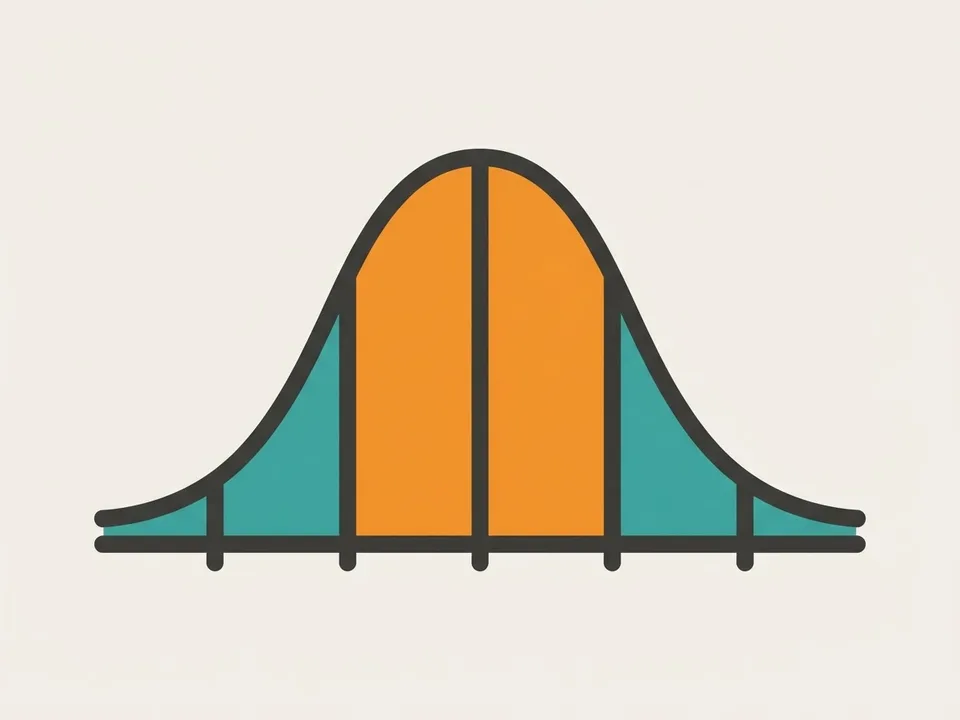
Khoảng tứ phân vị là đại lượng đo độ phân tán của 50% giữa trong một tập dữ liệu, được tính bằng hiệu giữa tứ phân vị thứ ba và tứ phân vị thứ nhất.The interquartile range measures the spread of the middle 50% of a data set, found by subtracting the first quartile from the third quartile.
Trực giác: Nếu xếp cả lớp theo chiều cao và bỏ đi một phần tư số người thấp nhất lẫn một phần tư số người cao nhất, khoảng tứ phân vị chính là khoảng cách giữa người thấp nhất và người cao nhất còn lại — nó đo sự chênh lệch của đúng phần giữa, không bị kéo lệch bởi hai đầu cực.Intuition: Line the whole class up by height, then remove the shortest quarter and the tallest quarter. The interquartile range is the height difference between the shortest and tallest people still standing — it measures the spread of just the middle group, so the extremes at either end cannot stretch it.
Công thức chínhKey formula
Định nghĩa đầy đủFull definition1 phút đọc1 min read
Khoảng tứ phân vị là số đo độ phân tán, bằng tứ phân vị thứ ba trừ tứ phân vị thứ nhất và cho biết độ rộng của nửa giữa dữ liệu. Vì không tính hai đuôi, nó ít bị giá trị ngoại lai tác động hơn khoảng biến thiên. Đây là một giá trị độ rộng, không phải khoảng có hai đầu mút.
The interquartile range is a measure of spread equal to the third quartile minus the first quartile, so it reports how wide the middle half of the data is. Because it ignores both tails, it is less affected by outliers than the range. It is a single width, not an interval with two endpoints.
Công thức chi tiếtFormula details2 công thức2 formulas
Dùng khi đo độ trải rộng của nửa giữa dữ liệu hoặc áp dụng quy tắc phát hiện ngoại lai.Use this to measure how spread out the middle half of the data is, or to apply an outlier rule.
Trong đóWhere
Dùng trong quy tắc 1,5 lần khoảng tứ phân vị để xác định hai hàng rào phát hiện ngoại lai.Use this in the 1.5 × IQR rule to locate the two fences that flag outliers.
Trong đóWhere
Hay hiểu saiCommon misconceptions3 ý · 1 phút đọc3 points · 1 min read
Khoảng tứ phân vị là một con số, không phải một đoạn.
Nó bằng tứ phân vị thứ ba trừ tứ phân vị thứ nhất; trên biểu đồ hộp, đó là bề rộng hộp, còn hai đầu hộp là hai tứ phân vị.
Khoảng tứ phân vị không phải khoảng biến thiên.
Khoảng biến thiên dùng giá trị lớn nhất và nhỏ nhất, còn khoảng tứ phân vị chỉ đo nửa giữa nên bền vững hơn trước giá trị ngoại lai.
Hàng rào ngoại lai không được tính quanh trung vị.
Trong quy tắc 1,5 lần khoảng tứ phân vị, trừ lượng này khỏi tứ phân vị thứ nhất và cộng vào tứ phân vị thứ ba.
The interquartile range is a single number, not a stretch of the number line.
It equals the third quartile minus the first quartile; on a boxplot it is the width of the box, while the ends of the box are the quartiles themselves.
The interquartile range is not the range.
The range uses the maximum and minimum, whereas the interquartile range describes only the middle half, which makes it far more resistant to outliers.
Outlier fences are not built around the median.
In the 1.5 × IQR rule, you subtract that amount from the first quartile and add it to the third quartile.
Mẹo phòng thiExam tips2 mẹo2 tips
Với phân bố lệch hoặc có ngoại lai, dùng trung vị và khoảng tứ phân vị.
Khi so sánh các phân bố, nêu hình dạng, trung tâm, độ phân tán và bối cảnh; giải thích khoảng tứ phân vị là số đo bền vững.
Khi tìm ngoại lai, hãy tính đủ hai hàng rào.
Tìm hai tứ phân vị, tính khoảng tứ phân vị, nhân với 1,5, rồi trừ khỏi tứ phân vị thứ nhất và cộng vào tứ phân vị thứ ba; cuối cùng đối chiếu dữ liệu.
For skewed distributions or data with outliers, report the median and interquartile range.
When comparing distributions, address shape, center, spread, and context, and explain that the interquartile range is a resistant measure.
When checking for outliers, compute both fences.
Find the two quartiles, take the interquartile range, multiply by 1.5, then subtract from the first quartile and add to the third quartile, and finally compare the data to those cutoffs.
Khái niệm này sinh ra từ đâuWhere the concept comes from1 phút đọc1 min read
1882Francis GaltonDonald MacAlister
Vì sao mang đúng cái tên này? Tên gọi ghép từ tiền tố inter- ("giữa") và quartile ("tứ phân vị"), tức khoảng nằm giữa hai tứ phân vị; các từ điển ghi nhận nó xuất hiện lần đầu trong khoảng 1880–1885. Phần "tứ phân vị" bắt nguồn từ ý tưởng chia đường cong phân bố thành bốn phần bằng nhau, nên MacAlister mới gọi hai mốc hai bên là tứ phân vị trên (higher quartile) và tứ phân vị dưới (lower quartile). Vì vậy cái tên nghe dài dòng ấy thật ra mô tả rất đúng việc phải làm: lấy hiệu của hai mốc để giữ lại đúng nửa giữa của dữ liệu. Cũng chính Galton là người đặt ra hai thuật ngữ quen thuộc khác là tương quan (correlation) và hồi quy về trung bình (regression toward the mean).
Thử nghiệm tương tácInteractive explorer
%22%20stroke%3D%22var(--accent-strong%2C%237c3aed)%22%20stroke-width%3D%221.6%22%2F%3E%3Ccircle%20cx%3D%22101.0%22%20cy%3D%22184.0%22%20r%3D%229%22%20fill%3D%22var(--accent-soft%2C%23ede9fe)%22%20stroke%3D%22var(--accent-strong%2C%237c3aed)%22%20stroke-width%3D%221.6%22%2F%3E%3Ccircle%20cx%3D%22101.0%22%20cy%3D%22165.0%22%20r%3D%229%22%20fill%3D%22var(--accent-soft%2C%23ede9fe)%22%20stroke%3D%22var(--accent-strong%2C%237c3aed)%22%20stroke-width%3D%221.6%22%2F%3E%3Ccircle%20cx%3D%22115.6%22%20cy%3D%22184.0%22%20r%3D%229%22%20fill%3D%22var(--accent-soft%2C%23ede9fe)%22%20stroke%3D%22var(--accent-strong%2C%237c3aed)%22%20stroke-width%3D%221.6%22%2F%3E%3Ccircle%20cx%3D%22130.2%22%20cy%3D%22184.0%22%20r%3D%229%22%20fill%3D%22var(--accent-soft%2C%23ede9fe)%22%20stroke%3D%22var(--accent-strong%2C%237c3aed)%22%20stroke-width%3D%221.6%22%2F%3E%3Ccircle%20cx%3D%22130.2%22%20cy%3D%22165.0%22%20r%3D%229%22%20fill%3D%22var(--accent-soft%2C%23ede9fe)%22%20stroke%3D%22var(--accent-strong%2C%237c3aed)%22%20stroke-width%3D%221.6%22%2F%3E%3Ccircle%20cx%3D%22144.8%22%20cy%3D%22184.0%22%20r%3D%229%22%20fill%3D%22var(--accent-soft%2C%23ede9fe)%22%20stroke%3D%22var(--accent-strong%2C%237c3aed)%22%20stroke-width%3D%221.6%22%2F%3E%3Ccircle%20cx%3D%22144.8%22%20cy%3D%22165.0%22%20r%3D%229%22%20fill%3D%22var(--accent-soft%2C%23ede9fe)%22%20stroke%3D%22var(--accent-strong%2C%237c3aed)%22%20stroke-width%3D%221.6%22%2F%3E%3Ccircle%20cx%3D%22159.4%22%20cy%3D%22184.0%22%20r%3D%229%22%20fill%3D%22var(--accent-soft%2C%23ede9fe)%22%20stroke%3D%22var(--accent-strong%2C%237c3aed)%22%20stroke-width%3D%221.6%22%2F%3E%3Ccircle%20cx%3D%22174.0%22%20cy%3D%22184.0%22%20r%3D%229%22%20fill%3D%22var(--accent-soft%2C%23ede9fe)%22%20stroke%3D%22var(--accent-strong%2C%237c3aed)%22%20stroke-width%3D%221.6%22%2F%3E%3Ccircle%20cx%3D%22188.6%22%20cy%3D%22184.0%22%20r%3D%229%22%20fill%3D%22var(--accent-soft%2C%23ede9fe)%22%20stroke%3D%22var(--accent-strong%2C%237c3aed)%22%20stroke-width%3D%221.6%22%2F%3E%3Ccircle%20cx%3D%22203.2%22%20cy%3D%22184.0%22%20r%3D%229%22%20fill%3D%22var(--accent-soft%2C%23ede9fe)%22%20stroke%3D%22var(--accent-strong%2C%237c3aed)%22%20stroke-width%3D%221.6%22%2F%3E%3Ccircle%20cx%3D%22217.8%22%20cy%3D%22184.0%22%20r%3D%229%22%20fill%3D%22var(--accent-soft%2C%23ede9fe)%22%20stroke%3D%22var(--accent-strong%2C%237c3aed)%22%20stroke-width%3D%221.6%22%2F%3E%3Ccircle%20cx%3D%22247.0%22%20cy%3D%22184.0%22%20r%3D%229%22%20fill%3D%22var(--accent-soft%2C%23ede9fe)%22%20stroke%3D%22var(--accent-strong%2C%237c3aed)%22%20stroke-width%3D%221.6%22%2F%3E%3Ccircle%20cx%3D%22349.2%22%20cy%3D%22184.0%22%20r%3D%229%22%20fill%3D%22var(--accent-soft%2C%23ede9fe)%22%20stroke%3D%22var(--accent-strong%2C%237c3aed)%22%20stroke-width%3D%221.6%22%2F%3E%3Ccircle%20cx%3D%22466.0%22%20cy%3D%22184.0%22%20r%3D%229%22%20fill%3D%22var(--accent-soft%2C%23ede9fe)%22%20stroke%3D%22var(--accent-strong%2C%237c3aed)%22%20stroke-width%3D%221.6%22%2F%3E%3Cline%20x1%3D%2228%22%20x2%3D%22612%22%20y1%3D%22194%22%20y2%3D%22194%22%20stroke%3D%22var(--text-faint%2C%2394a3b8)%22%20stroke-width%3D%221.2%22%2F%3E%3Ctext%20x%3D%22320%22%20y%3D%22238%22%20text-anchor%3D%22middle%22%20font-size%3D%2212%22%20fill%3D%22var(--text-muted%2C%2364748b)%22%3E%C4%90%C6%B0%E1%BB%9Dng%20k%C3%ADnh%20th%C3%A2n%20c%C3%A2y%20(inch)%3C%2Ftext%3E%3C%2Fsvg%3E)
Kéo chấm ngoài cùng ra thật xa — nhìn dải Q1–Q3 đứng yên
Kéo tham số, thấy khái niệm chuyển động — đăng nhập để mở.Drag the parameters and watch the concept move — sign in to open.
Bạn nắm chắc chưa?Check your understanding
Quiz câu thật từ ngân hàng đềReal exam questions from our question bank
Vài câu thật gắn đúng khái niệm này, chấm ngay kèm giải thích từng đáp án — hệ thống ghi nhớ bạn nắm tới đâu.A few real questions on exactly this concept, graded instantly with an explanation for every choice — the system remembers how well you know it.
Học tiếp từ đâyKeep learning
Hay nhầm vớiOften confused with
Cùng chủ đềSame topic
- tứ phân vịquartile
- đặc điểm bất thường (của phân phối)unusual features
- độ phân tánspread
- giá trị lớn nhấtmaximum
- giá trị nhỏ nhấtminimum
- phân vịpercentile
- râu (của biểu đồ hộp)whisker
- thống kê bền vững (resistant)resistant statistic
- thống kê mô tảdescriptive statistics
- thứ hạng bách phân vịpercentile rank
- trung tâmcenter
- biểu đồ chấmdotplot
Nguồn tham khảoReferences
- [1]Barron_AP_Stat_2026. tr. 115, 135–136.
Biên soạn bởi DucklingStudy, bản quyền thuộc DucklingStudy.Written by DucklingStudy. © DucklingStudy. Xuất bảnPublished .