

AP Chemistry
số oxi hóaoxidation number
oxidation numberVietnamese: số oxi hóa
Còn gọi:Also called: oxidation state · trạng thái oxi hóa
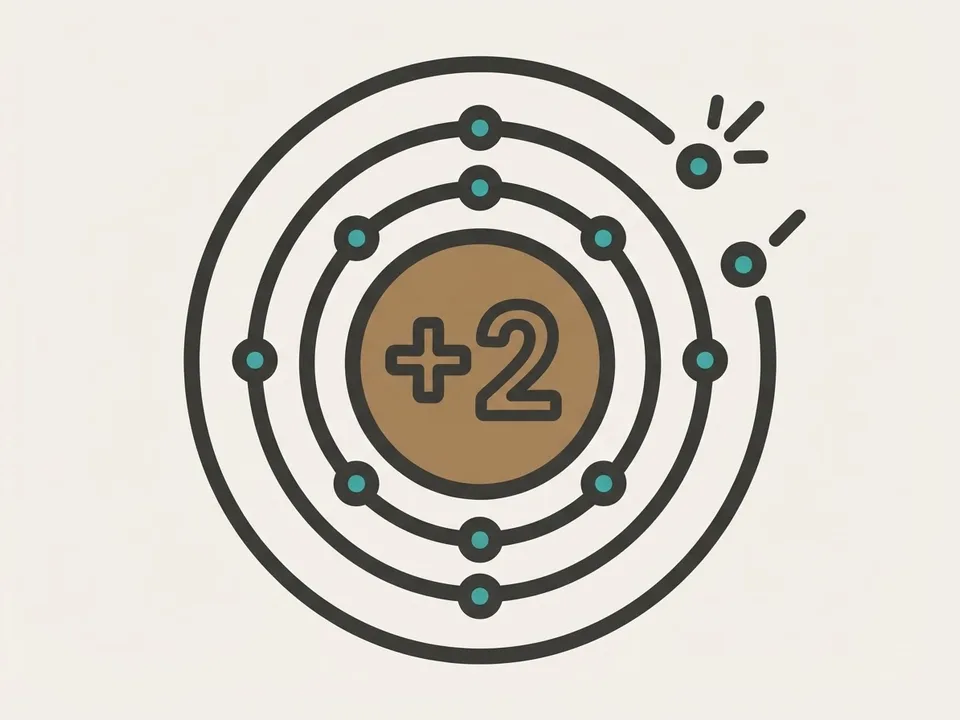
Số oxi hóa là số nguyên gán cho mỗi nguyên tử theo quy ước coi mọi liên kết là ion, dùng để nhận biết và cân bằng phản ứng oxi hóa–khử.An oxidation number is a whole number assigned to each atom by pretending every bond is ionic; it is used to spot and balance oxidation–reduction reactions.
Trực giác: Giống như chia hóa đơn bàn ăn theo quy ước: mỗi món ăn chung thì ghi hết chi phí vào người đã gọi món đó — không phản ánh đúng việc ai thực sự gắp miếng nào, nhưng tổng tiền vẫn khớp.Intuition: Think of splitting a restaurant bill by a rule: each shared dish is charged in full to whoever ordered it. The rule doesn't track who actually ate what, but the total still comes out right.
Công thức chínhKey formula
Định nghĩa đầy đủFull definition1 phút đọc1 min read
Số oxi hóa là đại lượng quy ước gán cho nguyên tử bằng cách coi electron liên kết thuộc hẳn về nguyên tử có độ âm điện lớn hơn, rồi so với nguyên tử trung hòa. Tổng số oxi hóa của mọi nguyên tử bằng điện tích của tiểu phân; khi số này tăng, nguyên tử bị oxi hóa, khi giảm, nguyên tử bị khử. Khác điện tích hình thức, số oxi hóa không chia đôi cặp electron liên kết và không phải điện tích thật đo được.
An oxidation number is a bookkeeping value assigned to an atom by giving the bonding electrons entirely to the more electronegative atom and then comparing the result with the neutral atom. The oxidation numbers of all atoms in a species sum to its charge; an atom whose oxidation number increases is oxidized, and one whose oxidation number decreases is reduced. Unlike formal charge, an oxidation number does not split a bonding pair evenly between the two atoms, and it is not a real, measurable charge.
- •ON, hoặc số La Mã trong ngoặc như Fe(III)
- •viết dấu trước số (+2, −2) để phân biệt với điện tích ion (2+, 2−)
- •ON, or a Roman numeral in parentheses such as Fe(III)
- •write the sign before the number (+2, −2) to distinguish it from ionic charge (2+, 2−)
Công thức chi tiếtFormula details2 công thức2 formulas
Dùng cho hợp chất trung hòa để kiểm tra tổng số oxi hóa của mọi nguyên tử bằng .Use this for a neutral compound: the oxidation numbers of all atoms must sum to .
Trong đóWhere
Dùng cho ion đa nguyên tử để kiểm tra tổng số oxi hóa bằng điện tích của ion.Use this for a polyatomic ion: the oxidation numbers must sum to the ion's charge .
Trong đóWhere
Hay hiểu saiCommon misconceptions3 ý · 1 phút đọc3 points · 1 min read
Oxygen không phải lúc nào cũng có số oxi hóa .
Trong peroxide như , oxygen có số oxi hóa ; trong , giá trị là . Gặp liên kết O–O hoặc oxygen liên kết với fluorine, cần kiểm tra ngoại lệ.
Số oxi hóa không phải điện tích thật của nguyên tử.
Nó được gán bằng giả định ion cho liên kết cộng hóa trị. Vì vậy, không dùng số oxi hóa để suy trực tiếp lực hút tĩnh điện hoặc độ tan.
Trong ion đa nguyên tử, tổng số oxi hóa không bằng .
Tổng phải bằng điện tích của ion; chỉ tiểu phân trung hòa mới có tổng bằng .
Oxygen does not always have an oxidation number of .
In peroxides such as oxygen is , and in it is . Whenever you see an O–O bond or oxygen bonded to fluorine, check for these exceptions.
An oxidation number is not the atom's actual charge.
It comes from pretending covalent bonds are ionic, so you cannot use it to predict electrostatic attraction or solubility directly.
In a polyatomic ion the oxidation numbers do not add up to .
Their sum equals the charge on the ion; only a neutral species has a sum of .
Mẹo phòng thiExam tips2 mẹo2 tips
Viết số oxi hóa trước và sau cho từng nguyên tố thay đổi.
Số tăng nghĩa là mất electron và bị oxi hóa; số giảm nghĩa là nhận electron và bị khử. Cách này làm rõ lập luận trong câu tự luận.
Đừng nhầm chất bị oxi hóa với chất oxi hóa.
Chất bị oxi hóa có số oxi hóa tăng, mất electron và là chất khử. Chất oxi hóa nhận electron nên có số oxi hóa giảm.
Write the oxidation number before and after the reaction for every element that changes.
An increase means electrons were lost and the atom was oxidized; a decrease means electrons were gained and the atom was reduced. This makes your reasoning explicit in free-response answers.
Do not confuse the substance oxidized with the oxidizing agent.
The substance oxidized loses electrons, has an increasing oxidation number, and acts as the reducing agent; the oxidizing agent gains electrons, so its oxidation number decreases.
Khái niệm này sinh ra từ đâuWhere the concept comes from1 phút đọc1 min read
1938Antoine LavoisierFriedrich WöhlerDmitri MendeleevWendell Mitchell LatimerLinus Pauling
Vì sao mang đúng cái tên này? Cái tên nghe lạ vì nó là di sản của một định nghĩa đã lỗi thời: với Lavoisier, "oxi hóa" nghĩa đen là kết hợp với oxygen, nên con số đo mức độ kết hợp ấy được gọi là số oxi hóa. Về sau ý nghĩa được tổng quát hóa thành sự mất electron một cách hình thức, nhưng cái tên cũ vẫn ở lại. Trước Latimer, tiếng Anh gọi đại lượng này bằng nhiều tên khác nhau như hóa trị, hóa trị phân cực (polar valence) hay số phân cực; thuật ngữ "oxidation state" mà ông dùng tương ứng với chữ Wertigkeit trong tiếng Đức. Do đó, đến năm 1948 IUPAC chính thức chọn cách gọi này thay cho hóa trị trong danh pháp, và từ đó hai lối nói số oxi hóa với trạng thái oxi hóa (oxidation state) được dùng gần như đồng nghĩa.
Bạn nắm chắc chưa?Check your understanding
Quiz câu thật từ ngân hàng đềReal exam questions from our question bank
Vài câu thật gắn đúng khái niệm này, chấm ngay kèm giải thích từng đáp án — hệ thống ghi nhớ bạn nắm tới đâu.A few real questions on exactly this concept, graded instantly with an explanation for every choice — the system remembers how well you know it.
Học tiếp từ đâyKeep learning
Hay nhầm vớiOften confused with
Cùng chủ đềSame topic
Nguồn tham khảoReferences
- [1]Chemistry The Central Science in SI Units 15th Expanded Global Edition. tr. 15, 24, 26.
Biên soạn bởi DucklingStudy, bản quyền thuộc DucklingStudy.Written by DucklingStudy. © DucklingStudy. Xuất bảnPublished .