

AP Statistics
ước lượng điểmpoint estimate
point estimateVietnamese: ước lượng điểm
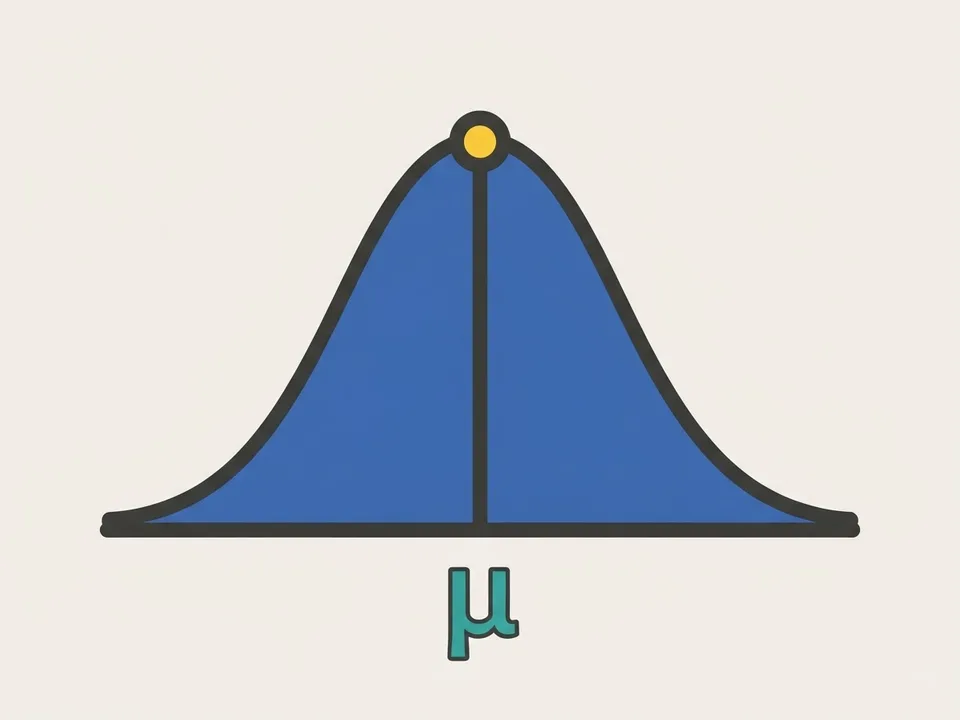
Ước lượng điểm là một giá trị số duy nhất tính từ dữ liệu mẫu, dùng làm giá trị đại diện hợp lý nhất cho tham số tổng thể.A point estimate is a single number computed from sample data and used as the most reasonable value to represent a population parameter.
Trực giác: Giống như ném phi tiêu: bạn nhắm một điểm duy nhất trên bia — có thể không trúng hồng tâm, nhưng đó là vị trí bạn tin là gần nhất.Intuition: Think of throwing a dart: you aim at one single spot on the board. You may miss the bullseye, but that spot is your best guess at where it is.
Công thức chínhKey formula
Định nghĩa đầy đủFull definition1 phút đọc1 min read
Ước lượng điểm là một giá trị thống kê duy nhất tính từ mẫu, dùng để đại diện cho tham số tổng thể chưa biết. Trung bình mẫu, tỉ lệ mẫu và độ lệch chuẩn mẫu lần lượt đại diện cho các tham số tương ứng.
Do biến động lấy mẫu, giá trị này thường không trùng tham số thật. Trong khoảng tin cậy dạng ước lượng cộng hoặc trừ biên sai số, nó là tâm; biên sai số xác định độ rộng quanh tâm.
A point estimate is a single statistic computed from a sample and used to stand in for an unknown population parameter. The sample mean, sample proportion, and sample standard deviation serve as point estimates for the corresponding population parameters.
Because of sampling variability, a point estimate rarely equals the true parameter. In a confidence interval written as estimate plus or minus margin of error, the point estimate is the center, and the margin of error sets the width on either side of it.
Công thức chi tiếtFormula details3 công thức3 formulas
Dùng một thống kê mẫu duy nhất để đại diện cho tham số tổng thể chưa biết.Use a single sample statistic to represent an unknown population parameter.
Trong đóWhere
Dùng khi lấy trung bình mẫu làm ước lượng điểm cho trung bình tổng thể của dữ liệu định lượng.Use this when the sample mean serves as the point estimate for the population mean of quantitative data.
Trong đóWhere
Dùng khi lấy tỉ lệ thành công trong mẫu làm ước lượng điểm cho tỉ lệ tổng thể của biến nhị phân.Use this when the proportion of successes in the sample serves as the point estimate for the population proportion of a binary variable.
Trong đóWhere
Hay hiểu saiCommon misconceptions3 ý · 1 phút đọc3 points · 1 min read
Ước lượng điểm không phải tham số tổng thể.
Đó là thống kê tính từ mẫu để đại diện cho tham số chưa biết.
Ước lượng chênh lệch hai nhóm phải giữ đúng phép trừ.
Tính thống kê từng nhóm rồi lấy hiệu theo thứ tự đã chọn; không cộng hoặc dùng riêng một nhóm.
Biên sai số không phải ước lượng điểm.
Trong khoảng dạng ước lượng ± biên sai số, ước lượng điểm là tâm, còn biên sai số cho độ rộng.
A point estimate is not the population parameter.
It is a statistic computed from a sample that represents the unknown parameter.
An estimate for a difference between two groups must preserve the subtraction.
Compute each group's statistic, then subtract in the order you chose — don't add them or use only one group.
The margin of error is not the point estimate.
In an interval of the form estimate ± margin of error, the point estimate is the center and the margin of error gives the width.
Mẹo phòng thiExam tips2 mẹo2 tips
Với khoảng dạng ước lượng ± biên sai số, lấy trung điểm hai đầu mút.
Nửa độ dài khoảng là biên sai số; không chọn một đầu mút.
Phân biệt ký hiệu tham số và thống kê mẫu.
Với tỉ lệ, dùng cho tổng thể và cho mẫu.
For an interval given as estimate ± margin of error, take the midpoint of the two endpoints.
Half the interval's length is the margin of error; never report an endpoint as the estimate.
Keep parameter and sample-statistic symbols straight.
For proportions, use for the population and for the sample.
Khái niệm này sinh ra từ đâuWhere the concept comes from1 phút đọc1 min read
1802 (Laplace) và 1895 (phương pháp mô-men của Pearson)LaplaceKarl PearsonR. A. Fisher
Vì sao mang đúng cái tên này? Chữ "điểm" trong tên gọi nhấn mạnh rằng kết quả chỉ là một giá trị đơn lẻ — một điểm trên trục số, chẳng hạn hay — chứ không phải cả một đoạn như trong ước lượng khoảng (interval estimation). Vì vậy tên gọi mô tả đúng hình dạng của câu trả lời: hỏi tổng thể trung bình bao nhiêu, ta chỉ đáp lại bằng một con số. Còn bản thân chữ "thống kê" thì đi một đường vòng xa hơn: nó bắt nguồn từ tiếng Latin mới statisticum collegium ("hội đồng nhà nước") và tiếng Ý statista ("chính khách"); Gottfried Achenwall đưa dạng tiếng Đức Statistik vào dùng năm 1749 để chỉ việc phân tích số liệu về nhà nước, và Sir John Sinclair mang từ này vào tiếng Anh năm 1791 khi xuất bản bộ Statistical Account of Scotland. Nói cách khác, ngành học vốn sinh ra để đếm dân, đếm thuế cho nhà nước — đúng như bài toán mà Laplace đã giải bằng một ước lượng điểm.
Thử nghiệm tương tácInteractive explorer
%22%20stroke%3D%22var(--accent-strong%2C%237c3aed)%22%20stroke-width%3D%221.6%22%2F%3E%3Ccircle%20cx%3D%22174.0%22%20cy%3D%22184.0%22%20r%3D%229%22%20fill%3D%22var(--accent-soft%2C%23ede9fe)%22%20stroke%3D%22var(--accent-strong%2C%237c3aed)%22%20stroke-width%3D%221.6%22%2F%3E%3Ccircle%20cx%3D%22236.6%22%20cy%3D%22184.0%22%20r%3D%229%22%20fill%3D%22var(--accent-soft%2C%23ede9fe)%22%20stroke%3D%22var(--accent-strong%2C%237c3aed)%22%20stroke-width%3D%221.6%22%2F%3E%3Ccircle%20cx%3D%22261.6%22%20cy%3D%22184.0%22%20r%3D%229%22%20fill%3D%22var(--accent-soft%2C%23ede9fe)%22%20stroke%3D%22var(--accent-strong%2C%237c3aed)%22%20stroke-width%3D%221.6%22%2F%3E%3Ccircle%20cx%3D%22290.8%22%20cy%3D%22184.0%22%20r%3D%229%22%20fill%3D%22var(--accent-soft%2C%23ede9fe)%22%20stroke%3D%22var(--accent-strong%2C%237c3aed)%22%20stroke-width%3D%221.6%22%2F%3E%3Ccircle%20cx%3D%22320.0%22%20cy%3D%22184.0%22%20r%3D%229%22%20fill%3D%22var(--accent-soft%2C%23ede9fe)%22%20stroke%3D%22var(--accent-strong%2C%237c3aed)%22%20stroke-width%3D%221.6%22%2F%3E%3Ccircle%20cx%3D%22353.4%22%20cy%3D%22184.0%22%20r%3D%229%22%20fill%3D%22var(--accent-soft%2C%23ede9fe)%22%20stroke%3D%22var(--accent-strong%2C%237c3aed)%22%20stroke-width%3D%221.6%22%2F%3E%3Ccircle%20cx%3D%22395.1%22%20cy%3D%22184.0%22%20r%3D%229%22%20fill%3D%22var(--accent-soft%2C%23ede9fe)%22%20stroke%3D%22var(--accent-strong%2C%237c3aed)%22%20stroke-width%3D%221.6%22%2F%3E%3Ccircle%20cx%3D%22453.5%22%20cy%3D%22184.0%22%20r%3D%229%22%20fill%3D%22var(--accent-soft%2C%23ede9fe)%22%20stroke%3D%22var(--accent-strong%2C%237c3aed)%22%20stroke-width%3D%221.6%22%2F%3E%3Cline%20x1%3D%2228%22%20x2%3D%22612%22%20y1%3D%22194%22%20y2%3D%22194%22%20stroke%3D%22var(--text-faint%2C%2394a3b8)%22%20stroke-width%3D%221.2%22%2F%3E%3Ctext%20x%3D%22320%22%20y%3D%22238%22%20text-anchor%3D%22middle%22%20font-size%3D%2212%22%20fill%3D%22var(--text-muted%2C%2364748b)%22%3EC%C3%A2n%20n%E1%BA%B7ng%20g%E1%BA%A5u%20%C4%91en%20c%C3%A1i%20(pound)%3C%2Ftext%3E%3C%2Fsvg%3E)
Kéo một con gấu sang phải — số ước lượng chạy theo, tham số đứng yên
Kéo tham số, thấy khái niệm chuyển động — đăng nhập để mở.Drag the parameters and watch the concept move — sign in to open.
Bạn nắm chắc chưa?Check your understanding
Quiz câu thật từ ngân hàng đềReal exam questions from our question bank
Vài câu thật gắn đúng khái niệm này, chấm ngay kèm giải thích từng đáp án — hệ thống ghi nhớ bạn nắm tới đâu.A few real questions on exactly this concept, graded instantly with an explanation for every choice — the system remembers how well you know it.
Học tiếp từ đâyKeep learning
Hay nhầm vớiOften confused with
Cùng chủ đềSame topic
- ước lượngestimator
- ước lượng chệchbiased estimator
- chọn mẫu không hoàn lạisampling without replacement
- điều kiện 10%10% condition
- lấy mẫu ngẫu nhiên lặp lạirepeated random sampling
- phân phối lấy mẫu của trung bình mẫusampling distribution of sample means
- phân phối mẫu (của một thống kê)sampling distribution of a statistic
- sai số chuẩnstandard error
- trung bình mẫusample mean
- bậc tự dodegrees of freedom
- cỡ mẫusample size
- định lý giới hạn trung tâmcentral limit theorem
Nguồn tham khảoReferences
- [1]Barron_AP_Stat_2026. tr. 392, 790.
Biên soạn bởi DucklingStudy, bản quyền thuộc DucklingStudy.Written by DucklingStudy. © DucklingStudy. Xuất bảnPublished .