

AP Statistics
phương saivariance
varianceVietnamese: phương sai
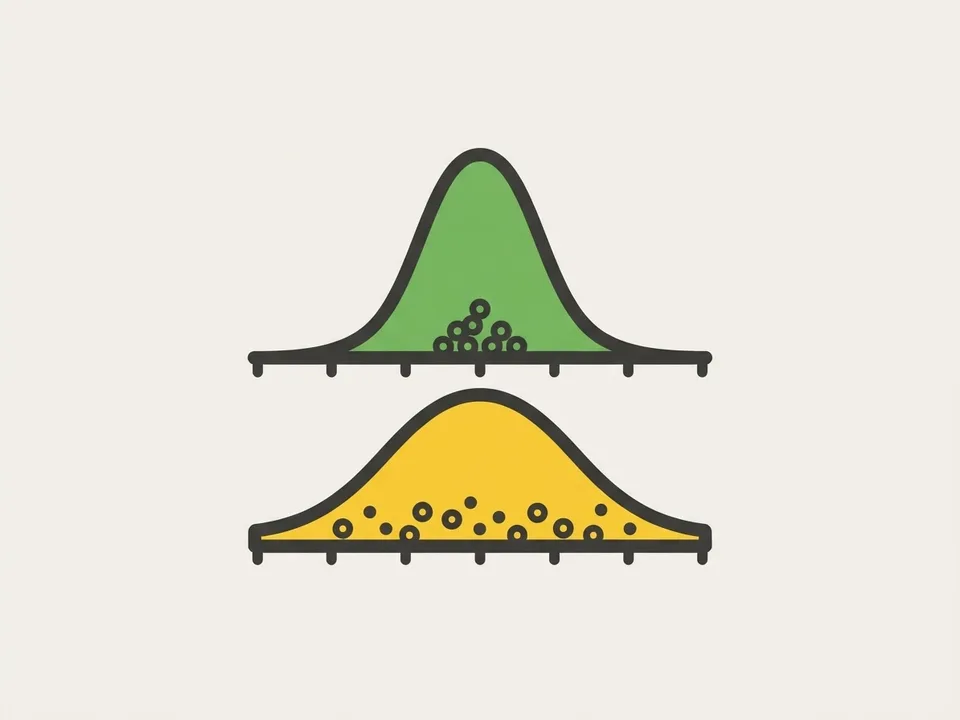
Phương sai là trung bình của các bình phương độ lệch so với giá trị trung bình — đo mức phân tán của dữ liệu nhưng mang đơn vị bình phương của dữ liệu gốc.Variance is the average of the squared deviations from the mean — a measure of spread carried in the squared units of the original data.
Trực giác: Bình phương của độ lệch chuẩn — to hơn, khó đọc hơn, nhưng cộng được.Intuition: The square of the standard deviation — bigger, harder to read, but it adds.
Công thức chínhKey formula
Định nghĩa đầy đủFull definition1 phút đọc1 min read
Phương sai là bước trung gian để tính độ lệch chuẩn: bình phương từng độ lệch để chúng không triệt tiêu nhau rồi lấy trung bình theo bậc tự do.
Vì mang đơn vị bình phương (điểm², kg²…), phương sai khó diễn giải trực tiếp trong ngữ cảnh — nên hầu hết kết luận thống kê dùng độ lệch chuẩn. Phương sai lại là dạng cộng được: với hai biến ngẫu nhiên độc lập, phương sai của tổng bằng tổng phương sai — tính chất mà độ lệch chuẩn không có.
Variance is the intermediate step on the way to the standard deviation: square each deviation so that they cannot cancel one another out, then average the squares over the degrees of freedom.
Because variance carries squared units (points², kg², …), it is hard to interpret directly in context, so most statistical conclusions are reported with the standard deviation instead. Variance, however, is additive: for two independent random variables, the variance of the sum equals the sum of the variances — a property the standard deviation does not share.
- • (mẫu)
- • (tổng thể)
- • (sample)
- • (population)
Giải nghĩa công thứcFormula breakdown1 công thức1 formula
Trong đóWhere
Hay hiểu saiCommon misconceptions2 ý · 1 phút đọc2 points · 1 min read
Với hai biến độc lập, phải cộng phương sai rồi khai căn, không cộng trực tiếp độ lệch chuẩn.
Báo cáo phương sai kèm đơn vị của dữ liệu gốc (viết “5 điểm” thay vì “5 điểm²”).
Standard deviations do not add; variances do.
For two independent variables, add the variances first and then take the square root. Adding the two standard deviations directly overstates the spread of the sum.
Variance must be reported in squared units, not the units of the original data.
Writing "5 points" instead of "5 points²" hides the fact that every deviation was squared.
Mẹo phòng thiTần suất ra thi
Thử nghiệm tương tácInteractive explorer
%22%20stroke%3D%22var(--accent-strong%2C%237c3aed)%22%20stroke-width%3D%221.6%22%2F%3E%3Ccircle%20cx%3D%22125.3%22%20cy%3D%22184.0%22%20r%3D%229%22%20fill%3D%22var(--accent-soft%2C%23ede9fe)%22%20stroke%3D%22var(--accent-strong%2C%237c3aed)%22%20stroke-width%3D%221.6%22%2F%3E%3Ccircle%20cx%3D%22144.8%22%20cy%3D%22184.0%22%20r%3D%229%22%20fill%3D%22var(--accent-soft%2C%23ede9fe)%22%20stroke%3D%22var(--accent-strong%2C%237c3aed)%22%20stroke-width%3D%221.6%22%2F%3E%3Ccircle%20cx%3D%22144.8%22%20cy%3D%22165.0%22%20r%3D%229%22%20fill%3D%22var(--accent-soft%2C%23ede9fe)%22%20stroke%3D%22var(--accent-strong%2C%237c3aed)%22%20stroke-width%3D%221.6%22%2F%3E%3Ccircle%20cx%3D%22164.3%22%20cy%3D%22184.0%22%20r%3D%229%22%20fill%3D%22var(--accent-soft%2C%23ede9fe)%22%20stroke%3D%22var(--accent-strong%2C%237c3aed)%22%20stroke-width%3D%221.6%22%2F%3E%3Ccircle%20cx%3D%22183.7%22%20cy%3D%22184.0%22%20r%3D%229%22%20fill%3D%22var(--accent-soft%2C%23ede9fe)%22%20stroke%3D%22var(--accent-strong%2C%237c3aed)%22%20stroke-width%3D%221.6%22%2F%3E%3Ccircle%20cx%3D%22203.2%22%20cy%3D%22184.0%22%20r%3D%229%22%20fill%3D%22var(--accent-soft%2C%23ede9fe)%22%20stroke%3D%22var(--accent-strong%2C%237c3aed)%22%20stroke-width%3D%221.6%22%2F%3E%3Ccircle%20cx%3D%22242.1%22%20cy%3D%22184.0%22%20r%3D%229%22%20fill%3D%22var(--accent-soft%2C%23ede9fe)%22%20stroke%3D%22var(--accent-strong%2C%237c3aed)%22%20stroke-width%3D%221.6%22%2F%3E%3Cline%20x1%3D%2228%22%20x2%3D%22612%22%20y1%3D%22194%22%20y2%3D%22194%22%20stroke%3D%22var(--text-faint%2C%2394a3b8)%22%20stroke-width%3D%221.2%22%2F%3E%3Ctext%20x%3D%22320%22%20y%3D%22238%22%20text-anchor%3D%22middle%22%20font-size%3D%2212%22%20fill%3D%22var(--text-muted%2C%2364748b)%22%3ETu%E1%BB%95i%20c%E1%BB%A7a%20tr%E1%BA%BB%20(n%C4%83m)%3C%2Ftext%3E%3C%2Fsvg%3E)
Kéo một chấm ra xa — nhìn phương sai nhảy vọt trong khi trung vị đứng yên
Kéo tham số, thấy khái niệm chuyển động — đăng nhập để mở.Drag the parameters and watch the concept move — sign in to open.
Bạn nắm chắc chưa?Check your understanding
Quiz câu thật từ ngân hàng đềReal exam questions from our question bank
Vài câu thật gắn đúng khái niệm này, chấm ngay kèm giải thích từng đáp án — hệ thống ghi nhớ bạn nắm tới đâu.A few real questions on exactly this concept, graded instantly with an explanation for every choice — the system remembers how well you know it.
Học tiếp từ đâyKeep learning
Hay nhầm vớiOften confused with
Cùng chủ đềSame topic
Nguồn tham khảoReferences
- [1]Barron_AP_Stat_2026. tr. 114, 116.
Biên soạn bởi DucklingStudy, bản quyền thuộc DucklingStudy.Written by DucklingStudy. © DucklingStudy. Xuất bảnPublished .